
search
Uncover hidden mineral wealth by mastering advanced exploration techniques. This course empowers you to generate high-value targets by integrating frontier geochemistry, geophysics, and more
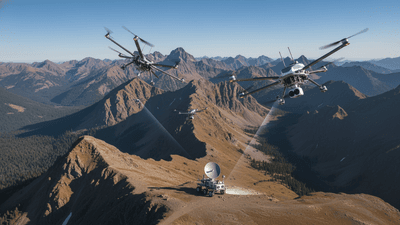
This course, "Advanced Exploration Methods & Target Generation," delves into cutting-edge strategies for discovering skarn and polymetallic ore deposits. It addresses the limitations of traditional geological methods, emphasizing an advanced scientific methodology to fully comprehend metallogeny, mineralization processes, and the fundamental origin of these critical deposits. Participants will gain a comprehensive understanding of deposit genesis, geology, and geochemical characteristics, moving from superficial observations to a deep grasp of underlying geological frameworks.
Advanced Conceptual Methods for Skarn Deposits: Explore advanced conceptual methods for analyzing skarn deposits, focusing on genesis, geology, and geochemical characteristics. Learn to accurately classify ore deposits, analyze magma and fluid origins, and understand the evolutionary processes involved in mineralization. You will utilize rare earth elements (REE) and trace element distributions to decipher mineralization stages and hydrothermal evolution.
Regional Geological Assessment & Structural Controls: Conduct a comprehensive regional geological assessment, focusing on crucial geological contexts, structural frameworks, and tectonic processes that generate ore fluids. Through detailed analysis of granitoid intrusions, carbonate rocks, and their interaction zones, you will clarify magma sources, identify lithological controls, and understand deep-seated crustal structures controlling mineralization.
Remote Sensing for Regional & Large-Scale Structural Analysis: Master the application of remote sensing for efficient regional and large-scale structural analysis. Utilize high-accuracy imagery to map lithological units, identify dispersion halos, and delineate structural controls on mineralization. Learn to process diverse datasets, reducing mapping time and cost, and enhancing targeting in high-terrain and hard-to-access areas.
Geophysical Methods for Subsurface Visualization: Delve into advanced geophysical techniques for interpreting and visualizing subsurface geological data. Understand how methods like gravity and magnetics detect physical feature differences between alteration zones and host rocks, crucial for identifying concealed skarn and polymetallic deposits. Integrate geophysics with geological data to refine deposit models and predict deep-seated mineralization.
Frontier Geochemical Methods for Genesis & Fluid Sources: Apply frontier geochemical methods to precisely categorize granitoid intrusions and carbonate rocks, clarifying magma and fluid sources. Utilize trace element analysis, REE patterns, and isotopic constitutions (Hf, Sr, Nd, O, C, and zircon) to reconstruct evolutionary processes, differentiate continental/oceanic crust origins, and identify specific mineralization stages. This deep dive into element migration and fluid-rock interaction is key for predicting gold and polymetallic deposits.
3D Genetic Models & Predictive Exploration: Construct robust 3D and 4D genetic models by integrating geological, geophysical, and geochemical data. Learn to visualize the complex, volumetric nature of ore deposits, understanding the mechanisms of ore-forming fluids and post-mineralization tectonic processes. Apply these models to predict concealed granite-skarn, gold, and SEDEX deposits, significantly optimizing drilling targets and executive decision-making.
Geostatistical Analysis for Anomaly Detection & Bedrock Mapping: Implement advanced geostatistical analysis, including cluster and factor analysis, to process multi-element geochemical datasets. Classify variables into homogenous groups, identify predominant element associations, and delineate pathfinder elements and dispersion halos. Utilize these methods for bedrock mapping and distinguishing between geochemical backgrounds and anomalies, enhancing the detection of skarn and rare earth element mineralization.
This course provides geologists, explorationists, and resource managers with the advanced knowledge and practical tools necessary for generating high-confidence targets in complex geological settings, ultimately driving successful and sustainable mineral exploration.

Advanced CPD for Canada’s Engineering & Geoscience Community
Northern Geoscience Training Group is a Canadian continuing-education provider dedicated to delivering high-quality professional development for engineers and geoscientists. The organization specializes in bridging regulatory expectations, technical standards, and practical field knowledge within mineral exploration, environmental engineering, and resource development. Our courses are designed to help practicing professionals stay current with evolving Canadian standards, including NI 43-101 requirements, CIM best practices, and provincial regulatory guidelines. With a focus on applied geology, engineering integrity, and responsible reporting, the company supports lifelong learning across the natural-resource and infrastructure sectors.
Jerry Luo, PhD, PE, is a licensed professional engineer in Ohio, Louisiana, and Texas, with over 15 years of diverse experience spanning higher education, research, and consulting in civil engineering and construction management. Renowned for his expertise in geotechnical engineering, he has published over 60 peer-reviewed research articles, significantly contributing to advancements in geotechnical risk assessment and infrastructure resilience. He also co-authored a widely recognized textbook on soil dynamics. Jerry has actively contributed to the global engineering community by serving on the editorial boards of multiple international journals and as a member of organizing committees for prestigious conferences. His work bridges academic excellence and industry practice, making a tangible impact on critical engineering projects. His dedication to mentorship and innovation reflects his commitment to shaping the next generation of civil engineers and advancing the profession through research, education, and practice.