
search
Go beyond the green surface to understand how plants grow, reproduce, and survive in the wild.
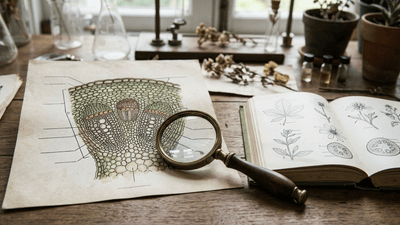
"Botany Fundamentals: Decoding Plant Life" offers a comprehensive overview of the incredible organisms that sustain our planet. This course delves into the core principles of plant anatomy, physiology, and ecology, unraveling the complex processes that govern how flora grow, reproduce, adapt, and interact with their environments.
The curriculum explores the microscopic inner workings of cellular photosynthesis, the structural marvels of roots, stems, leaves, and flowers, and the macroscopic dynamics of global plant ecosystems. By examining the evolutionary adaptations and vital ecological roles of various species, the course illuminates the hidden mechanisms of the green world, providing a profound exploration of the biological complexities and environmental importance of terrestrial plant life.

Online Courses for Engineers
HalfMoon Education is a nonprofit continuing education provider offering live webinars and on-demand courses for engineers, architects, landscape architects, land surveyors, attorneys, paralegals, accountants and others. Since 1996, we’ve helped thousands of professionals nationwide stay current with industry standards and codes, earn CE hours, and advance their expertise through practical, expert-led learning experiences. Learn more about us at: www.halfmoonseminars.org

Extension Assistant Professor of Biology at the University of Massachusetts Amherst
Dr. Seidler was trained in plant ecology at the University of California, Santa Cruz, and obtained his Ph.D. at Harvard University, where he studied the spatial distribution of tropical trees in the ultradiverse rainforest of Malaysia. He continued with a post-doc at Imperial College London’s Centre for Population Biology, where he studied invasive plants in the herbaceous community of Argentina’s flooding pampas. After returning to the U.S., he took a job with Native Plant Trust, a nonprofit organization that monitors rare plants in New England, among other activities. While there, he ran the Royal Botanic Gardens, Kew’s Millennium Seed Bank’s Northeast U.S. seed banking program and built a seed bank for the seeds of rare and endangered plants for the Native Plant Trust. In 2013, he took a faculty position at the University of Massachusetts Amherst, where he is Curator of the University of Massachusetts Herbarium—a medium-sized herbarium of 250,000 specimens—and teaches courses in botany and ecology.

Scientist/Ph.D. Candidate — Old Dominion University, Norfolk, VA
Ms. Jolman is a third-year Ecological Sciences Ph.D. candidate at Old Dominion University in Norfolk, Virginia. Her research focuses on understanding the ecological consequences of natural plant hybridization (the crossing of two species) by studying wild hybrid blueberries across Virginia. Ms. Jolman's research relies on the classification of plants to identify hybrids and their parent species; she uses genetics, plant traits, and pollinator interactions to explore the impact of hybrid plants. With the presence of hybrid plants increasing due to climate change, this work is increasingly relevant for conservation, management, and restoration purposes. In 2018, Ms. Jolman received a Bachelor of Science in Biology from Calvin University in Michigan; her undergraduate research worked to inventory the flora of West Michigan, relying heavily on plant identification in the field. During this time, Ms. Jolman also worked at a local Michigan nature center to develop educational programs for the county park. After graduation, she spent three years in Vermont as a Park Interpreter and Park Manager for Vermont State Parks, planning and facilitating ecological park programs for a diverse array of patrons while managing park operations. Along with pursuing her Ph.D. in Virginia, Ms. Jolman currently works with numerous organizations (Norfolk Botanical Gardens, schools, retirement groups, Master Naturalists, local nonprofits, and the Botanical Society of America’s Planting Science) to provide plant-focused educational programs to the public. She believes strongly in the equitable communication of science and strives to continually bridge the gap between academic research and the public through education.

Professor of Biology at the University of California, Santa Cruz
Jarmila Pitterman, Ph.D., is a Professor in the Department of Ecology and Evolutionary Biology at the University of California, Santa Cruz. Dr. Pitterman enjoys mentoring students with a broad interest in plant physiology, evolution, structure, and function. Her research involves a combination of field campaigns (collecting samples and using instruments to assess water potential, photosynthesis, etc.), hydraulic measures, anatomy, and stable isotopes. Dr. Pitterman earned her M.Sc. from the University of Toronto and her Ph.D. from the University of Utah