
search
Photo-Chemo-Mechanical Responses in Soft Hydrated Polymer Gels
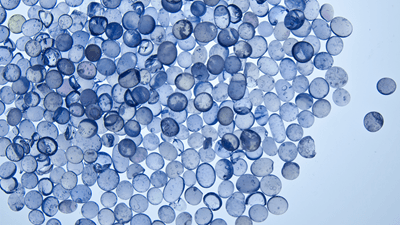
Soft and hydrated materials that consist of polymeric network and solvent are ubiquitous in nature from cells, tissues to organs. They are also important engineering materials. For instance, various hydrogels have been widely used as cell culture scaffold, drug carrier, microfluidic device, sensors, actuators, soft robots, fuel cell membrane, and many others. Defying the classical definitions of solid and fluid, these materials are both solid-like and fluid-like. The liquid component also provides an ideal media to host chemical reactions. The coupled liquid flow, chemical reaction, and network deformation makes the response of the materials sufficiently complex that ample room exists for new understandings connecting mechanics, chemistry and materials. In this work, we focus on a particular system, in which the polymeric network is incorporated with functional groups that can undergo photo-chemical reactions upon light irradiation. We develop a rigorous nonequilibrium thermodynamic framework to study the coupled photo-chemo-electro-mechanical responses of the light responsive gels. We will also demonstrate our design of new multifunctional materials with unique chemomechanical properties. Beside the challenges in theoretical modeling and despite the importance, the experiments that promote these fundamental studies of the multi-physics behaviors of the soft hydrated materials are still rare due to many practical challenges in material characterization.
Our work explores this important area by developing an oscillation indentation method that can be easily carried out using Atomic Force Microscope (AFM). Within the theory of poroelasticity for coupled diffusion and deformation, we showed that a unified solution could be obtained for cylindrical punch, spherical indenter and conical indenter. The solutions are summarized in remarkably simple forms allowing the material parameters including both mechanical and transport properties to be extracted with ease. The method is demonstrated on various gels using AFM.

The Global Home of Chemical Engineers
At every stage of your career, AIChE Academy is the definitive resource engineers use to sharpen their professional skills. We offer up-to-date courses and webinars in chemical engineering, process and hydrogen safety, bioengineering, sustainability, professional development, and many more.

Assistant Professor
Dr. Yuhang Hu is currently an assistant professor in the George W. Woodruff School of Mechanical Engineering and School of Chemical and Biomolecular Engineering. Dr. Hu received her B.S. degree in Engineering Mechanics from Shanghai Jiao Tong University, P. R. China in 2005, M.S. degree in Civil and Environmental Engineering from Nanyang Technological University, Singapore in 2007, M.S degree in Applied Physics from Harvard in 2009, and PhD degree in Engineering Sciences from Harvard in 2011. She was a Postdoctoral Fellow in the Wyss institute at Harvard from 2011-2014 studying Bio-inspired Materials. In 2015, she joined the faculty of Mechanical Science and Engineering at University of Illinois at Urbana Champaign as an assistant professor and moved to Georgia Tech in 2018. Her research focuses on Chemomechanics of Soft Active Materials, an interdisciplinary area between Mechanics and Polymer Chemistry. Her work involves both theory and experiment. She is the recipient of the NSF CARRER award, AFOSR YIP award, and Extreme Mechanics Letters Young investigator award.