
search
Master the principles of responsible outdoor lighting to design safe environments, protect ecosystems, and implement effective dark-sky ordinances.
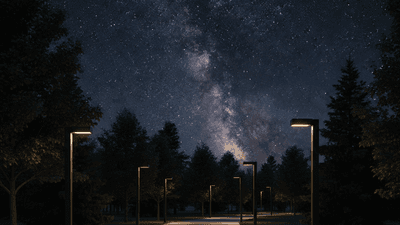
Explore the critical intersection of public safety, environmental conservation, and urban planning in the course Dark-Sky Lighting and Ordinances. As artificial lighting technology evolves, particularly with the widespread adoption of LEDs, communities face new challenges regarding light pollution, glare, and energy waste. This comprehensive seminar provides a deep dive into the principles of responsible outdoor lighting and the regulatory frameworks necessary to implement them effectively.
The course begins by establishing the fundamental concepts of dark-sky lighting. Participants will examine the unintended consequences of excess light at night, ranging from the disruption of human circadian rhythms to the ecological impact on the "Three Ps": Plants, Pollinators, and People. By debunking the myth that more light equals better safety, the curriculum highlights how visibility is actually driven by contrast rather than brightness. You will learn to identify common lighting issues such as glare, light trespass, and sky glow, and discover technical solutions including shielding, proper spectral power distribution, and the use of warm color temperatures to minimize blue light emission.
Moving from theory to policy, the course guides professionals through the intricacies of crafting and enforcing effective lighting ordinances. Because outdoor lighting is largely regulated at the municipal level, understanding local zoning and code enforcement is vital. The presentation details how to structure regulations using lighting zones (LZ0-LZ4), apply BUG (Backlight, Uplight, Glare) ratings, and manage the transition from legacy lighting systems through amortization and grandfathering provisions. Special attention is given to the balance between protecting the night sky and respecting property rights and public safety requirements.
To ground these concepts in reality, the course concludes with detailed case studies of successful implementation. You will analyze the regulatory strategies employed by Fort Collins, Colorado, and the large-scale public lighting retrofit in Tucson, Arizona, which successfully reduced sky glow and energy costs while maintaining safety standards.
Key Learning Outcomes:

Online Courses for Engineers
HalfMoon Education is a nonprofit continuing education provider offering live webinars and on-demand courses for engineers, architects, landscape architects, land surveyors, attorneys, paralegals, accountants and others. Since 1996, we’ve helped thousands of professionals nationwide stay current with industry standards and codes, earn CE hours, and advance their expertise through practical, expert-led learning experiences. Learn more about us at: www.halfmoonseminars.org

CEO of Visibility Innovations, LLC
Ms. Clanton is CEO of Visibility Innovations, LLC, a consulting firm specializing in sustainable and regenerative design. She is a registered professional engineer. Ms. Clanton is a member of the National Academy of Sciences committee on the assessment of solid-state lighting. She is a USA delegate for the International Organization for Standardization (ISO) 205 WG 7. Ms. Clanton received the 2018 Edison Report Lifetime Achievement Award, the 2014 American Council of Engineering Companies (ACEC) Colorado Outstanding Woman Engineer Award, the International Clean Design Award, and the 2021 CU Engineering Distinguished Alumni Award.
Principal Consultant at Dark Sky Consulting, LLC
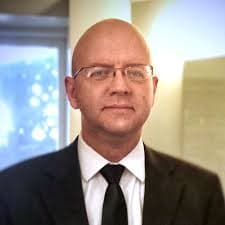
Mr. Barentine is the Principal Consultant at Dark Sky Consulting, LLC, and was formerly the Director of Public Policy for the International Dark-Sky Association. He earned a Ph.D. in Astronomy from the University of Texas at Austin, and he previously held staff positions at the National Solar Observatory, Apache Point Observatory, and the Sloan Digital Sky Survey. Throughout his career, he has been involved in education and outreach efforts to help increase the public understanding of science. He is a member of the American Astronomical Society and the International Astronomical Union, and he is a Fellow of the Royal Astronomical Society. The asteroid (14505) Barentine is named in his honor. His interests outside of astronomy and light pollution research include history, art, architecture, politics, law, and current events.