
search
This course provides an overview of the current U. S. electrical grid.

Since its origin in the early 1920s, the U. S. electrical grid has evolved to handle power sources whose output is predictable and can be controlled. Examples are coal, oil, natural gas, and hydropower. Because the output from these sources is controllable, operators of the grid can work with power plant operators to increase or decrease power production as the load on the grid varies. Through an intricate system of load balancing developed by many people over the years, grid operators are thus able to maintain stable, high-quality electrical power in the grid. Once renewable sources of energy such as solar and wind are attached to the grid, however, problems arise: these sources of energy are variable and uncertain.
Operators cannot control when the sun shines or when the wind blows. Thus operators now have to deal not only with a varying load, but also with a varying power source. This course provides an overview of the current U. S. electrical grid, including 1) how planning and operations are carried out to ensure reliability, 2) requirements for power reserves to provide continuous service in the face of equipment failure, 3) transmission technology, and 4) economic aspects. It then explores the challenges to the grid posed by high levels of variable renewable generation and some changes that are expected to occur in response to these challenges. Topics: This course teaches the following specific knowledge and skills: The North American electric power system Balancing authorities, regional entities, utilities and power pools Independent system operators, regional transmission operators, and other transmission organizations Utility system planning Grid reliability: planning reserves (reserve margin) Power system operations Transmission technology Transmission and institutional issues Technical challenge of variable generation Institutional challenges of variable generation Impact of variable generation on power system operations and transmission Intended Audience: engineers concerned with the use of solar and wind energy to produce electrical energy. Publication Source: US Dept. of Energy
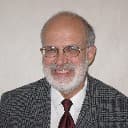
Civil Engneering faculty member for 27 years
Dr. Rossow is a graduate of the University of Michigan with B.S., M.S., and Ph.D. degrees. He is a licensed Professional Engineer in the State of Illinois. He taught civil engineering for over 35 years, including six years at Washington University in St. Louis and 29 years at Southern Illinois University Edwardsville, where he was the Chair of the Civil Engineering Department for ten years. His areas of expertise are in civil engineering and mechanics. He has consulted for various organizations, including government agencies and an international offshore drilling company. He has published numerous technical journal articles and technical reports for a variety of governmental agencies and private sector organizations. Mark P. Rossow, PE, PhD Licensed Professional Engineer in State of Illinois License No. 062.040560 Dr. Rossow is a graduate of the University of Michigan with B.S., M.S., and Ph.D. degrees. He taught civil engineering for over 35 years, including six years at Washington University in St. Louis and 29 years at Southern Illinois University Edwardsville, where he was the Chair of the Civil Engineering Department for ten years. His areas of expertise are in civil engineering and mechanics. He has consulted for various organizations, including government agencies and an international offshore drilling company. He has published many journal articles and technical reports.