
search
Life Cycle Assessment of Industrial System's Environmental Impact: Principles and Practice
This online engineering PDH course provides an introductory overview of Life Cycle Assessment (LCA). As environmental awareness increases in the general public, many companies have begun to explore ways of moving beyond mere compliance with the law and instead have sought to evaluate the effects of the companies’ products and practices over their entire lifetimes. LCA is a tool designed to provide this evaluation. LCA is a “cradle-to-grave” approach for assessing industrial systems. “Cradle-to-grave” begins with the gathering of raw materials from the earth to create the product and ends at the point when all materials are returned to the earth. LCA evaluates all stages of a product’s life from the perspective that they are interdependent, meaning that one operation leads to the next. LCA enables the estimation of the cumulative environmental impacts resulting from all stages in the product life cycle, often including impacts not considered in more traditional analyses (e.g., raw material extraction, material transportation, ultimate product disposal, etc.). By including the impacts throughout the product life cycle, LCA provides a comprehensive view of the environmental aspects of the product or process and a more accurate picture of the true environmental trade-offs in product and process selection.
The present course is designed to be an educational tool for someone who wants to learn the basics of LCA, how to conduct an LCA, or how to manage someone conducting an LCA. Topics: Definition of life cycle assessment Benefits of conducting an LCA Limitations of conducting an LCA Goal definition and scoping Life cycle inventory Key steps of a life cycle inventory Life cycle impact assessment Key steps of a life cycle impact assessment Life cycle interpretation.
Intended Audience: This course is intended for engineers involved in determining the environmental impact of their organizations’ products and practices.
Publication Source: This course is based on the Environmental Protection Agency document, “Life Cycle Assessment: Principles and Practice,” EPA/600/R-06/060, May 2006.
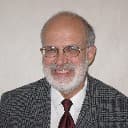
Civil Engneering faculty member for 27 years
Dr. Rossow is a graduate of the University of Michigan with B.S., M.S., and Ph.D. degrees. He is a licensed Professional Engineer in the State of Illinois. He taught civil engineering for over 35 years, including six years at Washington University in St. Louis and 29 years at Southern Illinois University Edwardsville, where he was the Chair of the Civil Engineering Department for ten years. His areas of expertise are in civil engineering and mechanics. He has consulted for various organizations, including government agencies and an international offshore drilling company. He has published numerous technical journal articles and technical reports for a variety of governmental agencies and private sector organizations. Mark P. Rossow, PE, PhD Licensed Professional Engineer in State of Illinois License No. 062.040560 Dr. Rossow is a graduate of the University of Michigan with B.S., M.S., and Ph.D. degrees. He taught civil engineering for over 35 years, including six years at Washington University in St. Louis and 29 years at Southern Illinois University Edwardsville, where he was the Chair of the Civil Engineering Department for ten years. His areas of expertise are in civil engineering and mechanics. He has consulted for various organizations, including government agencies and an international offshore drilling company. He has published many journal articles and technical reports.