
search
This online engineering PDH course describes strategies to help state and local air officials reduce fine particle pollution that is attributed to residential wood smoke.
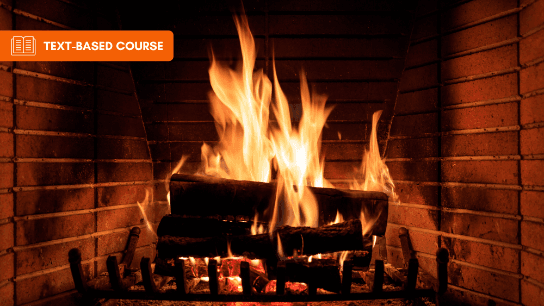
This online engineering PDH course describes strategies to help state and local air officials reduce fine particle pollution that is attributed to residential wood smoke. Because wood stoves, hydronic heaters, and similar appliances can be used around the clock in residential areas, they can cause significant and varying health and quality of life issues. For example, fireplaces may represent as much as 75% of the pollution from wood-burning devices on bad air quality days in the San Francisco Bay area.
This course also provides education and outreach tools, information on regulatory approaches to reduce wood smoke, as well as information about voluntary programs that communities around the country have used to replace old, inefficient wood stoves, hydronic heaters, and fireplaces. It includes EPA federal actions to help communities address residential wood smoke throughout the United States. In addition, this course includes possible approaches for funding replacement programs, methods for calculating emission reductions, and the basic components of a wood smoke reduction plan for fine particles in areas where wood smoke is of concern.
Topics: This course covers the following specific knowledge and skills: Regulatory programs Voluntary programs Education and outreach Funding mechanisms Partnerships Other tools
Intended Audience: This course is intended for environmental and construction engineers, as well as air-quality officials, and other engineers whose job description may require knowledge of residential wood smoke mitigation strategies.
Publication Source: This course is based on the Environmental Protection Agency document, “Strategies for Reducing Residential Wood Smoke,” Publication No. EPA-456/B-13-001, revised March 2013.
Civil Engneering faculty member for 27 years
Dr. Rossow is a graduate of the University of Michigan with B.S., M.S., and Ph.D. degrees. He is a licensed Professional Engineer in the State of Illinois. He taught civil engineering for over 35 years, including six years at Washington University in St. Louis and 29 years at Southern Illinois University Edwardsville, where he was the Chair of the Civil Engineering Department for ten years. His areas of expertise are in civil engineering and mechanics. He has consulted for various organizations, including government agencies and an international offshore drilling company. He has published numerous technical journal articles and technical reports for a variety of governmental agencies and private sector organizations. Mark P. Rossow, PE, PhD Licensed Professional Engineer in State of Illinois License No. 062.040560 Dr. Rossow is a graduate of the University of Michigan with B.S., M.S., and Ph.D. degrees. He taught civil engineering for over 35 years, including six years at Washington University in St. Louis and 29 years at Southern Illinois University Edwardsville, where he was the Chair of the Civil Engineering Department for ten years. His areas of expertise are in civil engineering and mechanics. He has consulted for various organizations, including government agencies and an international offshore drilling company. He has published many journal articles and technical reports.