
search
Discover the optimal insulation solutions for your projects, from foundational principles to advanced applications, ensuring energy efficiency and code compliance in every design.
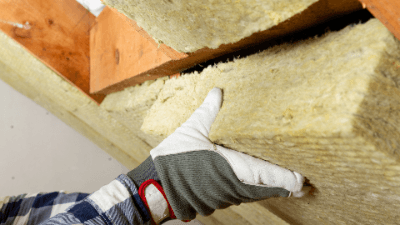
This six‐hour course examines six types of insulation options for residential and commercial buildings, focusing on performance, cost, lifespan, installation, application, and compliance with building and energy codes. The course also demonstrates how to calculate R‐values and U‐values and identifies code requirements
for insulation and energy efficiency in the IBC, IRC, IEBC, and IECC.
Throughout this program, you will explore:
Insulation Basics: Understand R-values, U-values, and the critical role of insulation in building code compliance, history, and methods of heat transfer.
Conventional Bat and Cellulose Insulation: Evaluate the advantages, disadvantages, cost implications, and specific applications of fiberglass bat and cellulose, including insights into faced vs. unfaced options.
Spray Foam Insulation: Delve into the world of open-cell and closed-cell spray foam, comparing their properties, installation nuances, associated costs, and fire safety considerations.
Wool Insulation: Discover the benefits and drawbacks of traditional sheep's wool and mineral wool (rock wool), focusing on their sustainability, acoustic properties, and fire resistance.
Polystyrene Foam Board Insulation: Distinguish between Expanded Polystyrene (EPS) and Extruded Polystyrene (XPS), examining their thermal performance, moisture resistance, and suitability for various applications, including below-grade and radiant slab scenarios.
Polyisocyanurate (Polyiso) Foam Board Insulation: Gain a deep understanding of Polyiso, its superior thermal resistance, diverse facer options, and crucial fire performance characteristics in both roofing and wall systems.
By the end of this course, you will be able to:
Whether you're developing high-rise commercial buildings, renovating residential homes, or seeking to optimize energy performance, this course provides the essential knowledge to make informed, impactful decisions that contribute to sustainable, comfortable, and compliant structures.

Online Courses for Engineers
HalfMoon Education is a nonprofit continuing education provider offering live webinars and on-demand courses for engineers, architects, landscape architects, land surveyors, attorneys, paralegals, accountants and others. Since 1996, we’ve helped thousands of professionals nationwide stay current with industry standards and codes, earn CE hours, and advance their expertise through practical, expert-led learning experiences. Learn more about us at: www.halfmoonseminars.org

Associate AIA, CSI, CCPR, CDT, REWO
Mr. Stevens received his Master’s degree in Architecture from Texas Tech University and has over 25 years in the building industry. His experience includes architectural design, construction, consulting, as well as training and development roles. As a Building Envelope & Architectural Consultant at Sika he works directly with Architects, Contractors, Consultants and Specifiers to select the optimal insulation and envelope components for their projects while meeting applicable building codes. Mr. Stevens is an active member that serves on the boards of several CSI and BEC chapters in Texas. In addition to serving as chair of BEC Dallas, he also serves on the AIA Dallas COTE (Committee On The Environment). He is also a committee member on several RAiNA committees.