
search
Unveiling the Mysteries of Science: A Journey from Newtonian Mechanics to Nuclear Physics.
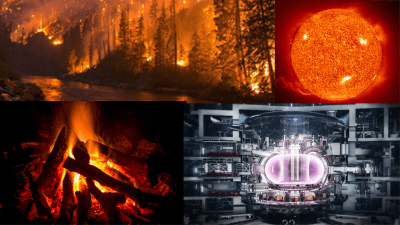
What is the nature of matter and energy? What is physics? What is chemistry? What is the difference between a chemical and a nuclear reaction? In this course, minimizing the math to emphasize science, we study the history of the discovery of the underlying scientific concepts. We start with Isaac Newton, who first formulated the concept of force, defined mass as a measure of an amount of matter, using a property called inertia, and related how these forces change the motion of objects around us, according to their mass. Eventually, this led to the concept of energy, the ability to perform work and overcome resistance. Work, a form of energy, was defined as a force operating on an object of mass through a distance. In addition to mass, it was soon discovered that matter had another force-related property called charge. Work and heat energy could be derived from gases. A study of gases led to the concept of atoms. Soon particles were discovered that carried the charge properties of atoms, and a quest was underway to understand the "subatomic" particles that make up atoms. With the discovery of the neutron in 1932, the concept of the atom as we know it today was generally complete.
Along the way, it was discovered that some atoms undergo "spontaneous" radioactive decay, emitting radiations of distinct particles with different masses and charges, "transmutation" of the parent element into different daughter elements, as well as radiation in the form of "electromagnetic waves." In 1933, Leo Szilard hypothesized that atoms, absorbing neutrons, might divide into new elements, as well as the known radioactive particles, and release more neutrons in what is known as a chain reaction. The following year, Enrico Fermi demonstrated that these "neutron capture" processes can, in fact, make substances radioactive. But it was Otto Hahn and Lise Meitner who discovered the first example of "fission" in Germany in 1938. The news so alarmed Leo Szilard, that he drafted a letter to FDR and obtained the signatures of several prominent physicists, including Albert Einstein, warning of the possibility of a "fission" atomic bomb. The race for the atomic bomb was on.
During the 1930s, another nuclear reaction called nuclear fusion was postulated as the energy of the Sun. In the 1950's, "uncontrolled" nuclear fusion energy was first tapped by humans in the form of a thermonuclear bomb. "Controlled" nuclear fusion has the potential to provide abundant, clean energy with no radioactive byproducts, an ongoing quest to solve humanity's energy crisis. Nuclear fusion in stars, called nucleosynthesis, produces the elements up to iron, while subsequent cosmic neutron capture creates the remainder of the elements, including all of the atoms in our bodies. "We are stardust, we are golden, we are billion-year-old carbon, and we've got to get ourselves back to the garden."
Principal Geologist at Provenance Geosciences and founder of Carbon Negative Water and Energy 501 (c) (3)
Dr. Hoaglund is a geologist with more than 35 years of experience in environmental research, teaching, and consulting in the private sector, government, and academia. He received his BS (1985) and MS (1987) degrees in geology from the University of Wisconsin, worked in research and consulting in Wichita, Kansas on projects related to ground water supply and contamination, then returned to academics in 1991, receiving his doctoral degree in geological sciences from Michigan State University in 1996. As part of his dissertation, he completed the US Geological Survey (USGS) Regional Aquifer Systems Analysis (RASA) groundwater model of the Michigan Basin, a model used to calculate modern and Pleistocene groundwater and brine discharge to the Great Lakes and rivers in Michigan. He taught hydrogeology, groundwater modeling, environmental geology, and glacial / climate geology at the University of Michigan before joining the Pennsylvania State University research on regional climate-hydrologic models, sponsored by the National Science Foundation, and groundwater nitrate studies, funded by the US Department of Agriculture. In 2007, Dr. Hoaglund resumed groundwater consulting, focusing primarily on sites involving perchlorate groundwater contamination in southern California. While reviewing the reactions involved in the manufacture of perchlorate, he recognized the potential for the electrolysis reaction to consume salt waste while producing hydrogen. Later, reviewing DOW documents describing the reasons and methods for the air-tight conditions required for the storage of sodium hydroxide byproducts, he recognized the potential for the aeration reaction to sequester carbon into bicarbonate. Dr. Hoaglund founded Carbon Negative Water Solutions, LLC in 2010 to pursue the trifecta of desalination, water resource development, hydrogen production, and CO2 sequestration. In addition to continued groundwater consulting, he wrote extensively about the potential for coupling ocean desalination with carbon sequestration, and approached several water and energy companies with the idea to promote mutually beneficial cooperation. He discovered these companies operate in separate universes on projects that are planned over a decade or more, and are reluctant to adopt new technologies over the established and state-approved method for greenhouse gas (GHG) mitigation: offsetting. In 2015, Dr. Hoaglund relocated to Las Vegas to accept contract work with Navarro Research and Engineering for the Department of Energy, assisting with groundwater characterization and modeling of the Nevada National Security Site (formerly Nevada Test Site), work related to the legacy groundwater contamination associated with historic nuclear testing. In 2019 he transitioned the Carbon Negative Water Solutions LLC to the non-profit Carbon Negative Water and Energy. In addition to the non-profit, he maintains a private research consulting and e-learning service, Provenance Geosciences.