
search
This course describes the technology of hydropower generation and provides estimates of hydropower availability.
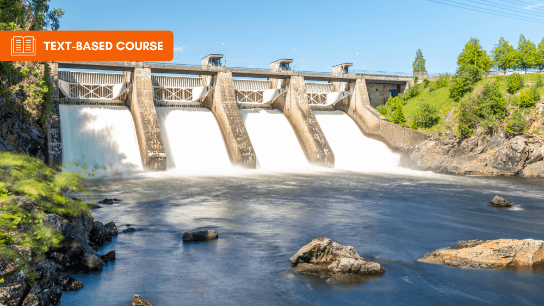
Hydropower is currently the largest source of renewable electricity generation in the United States, representing approximately 7% of total generation. Larger plants with water storage capability will play an important role in the future development of wind and solar power generation by providing back-up power to smooth out the fluctuations associated with these variable power sources. This course describes the technology of hydropower generation and provides estimates of hydropower availability. The advantages of generating electricity by hydropower rather than by fossil fuels are presented. Environmental impacts such as impounding water, flooding terrestrial habitats, and preventing the movement of fish and aquatic organisms, sediments, and nutrients are also described. Barriers to the expansion of hydropower, such as the high capital cost of new hydropower projects and the lengthy licensing and approval process are discussed.
Topics: Estimates of hydropower availability Overview of hydropower technology Environmental advantages over generation of power from fossil fuels Environmental and social disadvantages Manufacturing and materials requirements Potential for and barriers to expansion of hydropower
Intended Audience: engineers concerned with the development of renewable energy technologies for electrical generation.
Publication Source: US Dept. of Energy (Renewable Energy Futures Study)

Civil Engneering faculty member for 27 years
Dr. Rossow is a graduate of the University of Michigan with B.S., M.S., and Ph.D. degrees. He is a licensed Professional Engineer in the State of Illinois. He taught civil engineering for over 35 years, including six years at Washington University in St. Louis and 29 years at Southern Illinois University Edwardsville, where he was the Chair of the Civil Engineering Department for ten years. His areas of expertise are in civil engineering and mechanics. He has consulted for various organizations, including government agencies and an international offshore drilling company. He has published numerous technical journal articles and technical reports for a variety of governmental agencies and private sector organizations. Mark P. Rossow, PE, PhD Licensed Professional Engineer in State of Illinois License No. 062.040560 Dr. Rossow is a graduate of the University of Michigan with B.S., M.S., and Ph.D. degrees. He taught civil engineering for over 35 years, including six years at Washington University in St. Louis and 29 years at Southern Illinois University Edwardsville, where he was the Chair of the Civil Engineering Department for ten years. His areas of expertise are in civil engineering and mechanics. He has consulted for various organizations, including government agencies and an international offshore drilling company. He has published many journal articles and technical reports.