Bridge the gap between open standards and proprietary hardware from SEL, Siemens, and ABB.
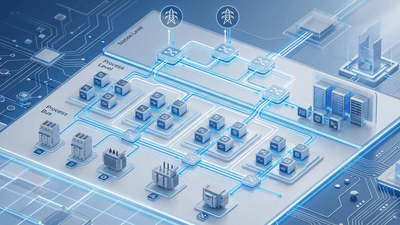
This course explains how IEC 61850 is applied in real equipment from three major protection and automation vendors: SEL, meaning Schweitzer Engineering Laboratories; Siemens; and ABB, meaning Asea Brown Boveri.
The course does not attempt to teach every software menu or every relay model. Instead, it teaches students how to recognize the common IEC 61850 ideas inside each vendor’s tools, relay settings, configuration files, datasets, reports, GOOSE messages, and testing workflows.
The main purpose of the course is to help students understand that IEC 61850 is a standard, but each vendor presents the standard in a slightly different way. The student will learn how to look past the vendor-specific screens and identify the same underlying IEC 61850 concepts.
Why This Course is Needed
This course is needed because many students can understand IEC 61850 in theory but become confused when they open real vendor software.
The same IEC 61850 idea may appear differently in SEL, Siemens, and ABB tools. For example, each vendor may use different menus, labels, file handling methods, naming styles, dataset configuration screens, report configuration screens, and GOOSE publishing or subscribing workflows.
This course helps bridge the gap between classroom theory and field application. It shows the student how the ideas from Course #1 and Course #2 appear in actual vendor environments.
Course Learning Outcomes
By the end of this course, the student should be able to:
- Explain how IEC 61850 concepts appear inside SEL, Siemens, and ABB systems.
- Recognize vendor-specific terms while still understanding the common IEC 61850 meaning.
- Identify where SCL files are created, imported, exported, and used.
- Explain the purpose of common SCL file types, including ICD, meaning IED Capability Description; SCD, meaning Substation Configuration Description; and CID, meaning Configured IED Description.
- Describe how GOOSE messages are configured in vendor tools.
- Describe how MMS reports and datasets are handled in vendor systems.
- Compare how SEL, Siemens, and ABB present similar IEC 61850 functions.
- Understand the basic steps used to test and verify vendor-specific IEC 61850 configurations.
- Recognize common mistakes that occur when moving from standard IEC 61850 theory to real device configuration.

An entire career in the power sector of engineering, Graham graduated from Queen's university coupled with subsequent studies with Wilfrid Laurier University to travel the globe and apply his skills and garner his protection and control experience internationally. His passion for staying in touch with his profession and his kinship for mentoring has kept him in front of an audience of learners.
