
search
Master IBC Chapter 17 inspections for structural steel, concrete, and masonry. Gain critical insights to ensure compliance and avoid costly project pitfalls.
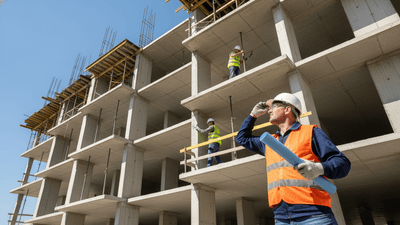
This eight-hour course examines International Building Code compliance for the testing and inspection of materials and inspection of soil and foundations, concrete, masonry, structural steel construction, and sprayed fire-resistant materials.
This course will cover detailed inspection necessities across core disciplines, including:
Structural Steel & Welding: Explore the complexities of AISC 360, AWS D1.1, and RCSC standards, focusing on high-strength bolting, welding procedures, welder certifications, and the critical role of nondestructive testing (NDT), particularly ultrasonic testing (UT).
Concrete: Deep dive into ACI 318 and ACI 301, covering mix design reviews, compliance with exposure classes, thermal management during placement, and procedures for sampling and testing concrete specimens. We'll also tackle common pitfalls, such as inaccurate water-cement ratios and improper curing.
Masonry: Understand TMS 402/602 requirements for masonry units, mortar, and grout. Learn about in-depth field tests, quality assurance for materials, and visual inspections for wall plumbness and levelness. Emphasis will be placed on proper mortar mixing, water retention, and the impact of masonry sand quality on overall durability.
Sprayed Fire-Resistant Materials (SFRM) & Intumescent Coatings: Examine specific application techniques, density tests, and bond strengths for SFRMs, including the impact of building height on material selection and adherence. We’ll also cover intumescent coatings, highlighting their unique properties and inspection protocols.
Geotechnical & Soils: Discover the essential role of geotechnical reports as outlined in IBC Chapter 18, including subsurface investigation methods, proper soil classification, and critical considerations for compacted fill, bearing capacity, and settlement under various site conditions. We’ll also examine the evolving ASCE standards for seismic design categories.
Join us to enhance your expertise in IBC Chapter 17 inspections and contribute to safer, more resilient built environments.

Online Courses for Engineers
HalfMoon Education is a nonprofit continuing education provider offering live webinars and on-demand courses for engineers, architects, landscape architects, land surveyors, attorneys, paralegals, accountants and others. Since 1996, we’ve helped thousands of professionals nationwide stay current with industry standards and codes, earn CE hours, and advance their expertise through practical, expert-led learning experiences. Learn more about us at: www.halfmoonseminars.org

Executive Director of Code Compliance and Training with Froehling & Robertson, Inc.
Mr. Tuck has more than 50 years of experience in the materials testing and construction inspection industry. He has been a code influencer. In the early 1990s, he published a 47-page Construction Specifications Institute (CSI) monograph entitled BOCA Special Inspection Services as a learning and teaching tool for testing agencies, architects, engineers, municipalities, and building officials, etc. This document became the foundation for the original Chesterfield County, Virginia, special inspection program which today is known to be one of the best special inspection programs in the region. This CSI monograph impacted and assisted the development of special inspection programs of many other Virginia jurisdictions during the early days of BOCA and IBC. Mr. Tuck started his career with Froehling & Robertson in 1964 as a materials technician and fulfilled many duties including senior field technician, radiographic assistant, drill rig operator, laboratory technician, and structural steel inspector, quickly being promoted to branch manager of the Roanoke office in 1966. Over the next few decades, Mr. Tuck also managed F&R’s operations in Norfolk, Lynchburg, and Chesapeake, Virginia. During this time, he was designated as the company-wide manager of construction materials testing services, working in F&R’s Richmond headquarters. In the late 1990s, Mr. Tuck took on company business development. Mr. Tuck developed training courses related to special inspection requirements of the International Building Code (IBC) and the various statewide building codes in jurisdictions where F&R maintains operations, including Maryland, Virginia, District of Columbia, and the Carolinas. He cultivated and expanded inter-company special inspections code training courses for F&R’s technicians, special inspectors, and engineers. These technical code training courses formed the basis of F&R’s Continuing Education Program and Lunch & Learn Series which are comprised of building code training courses regarding soils, geotechnical engineering, concrete, masonry, sprayed fire-resistant materials, structural steel and many other disciplines. As F&R’s very first executive director of code compliance and training, Mr. Tuck has provided special inspections training and code training to hundreds of firms and thousands of professionals over the past decade and has dedicated this phase of his professional career to the study and instruction of the various building code changes throughout the different code cycles. He also is well versed in the major code changes of the “enforcer” codes such as AWS (welding), AISC (steel), ACI 318 (concrete), ACI 530 (masonry), in addition to the latest revisions of the International Building Code (IBC) and statewide codes within F&R’s geographical region.