What every energy engineer needs to know about Liquefied Natural Gas Safety
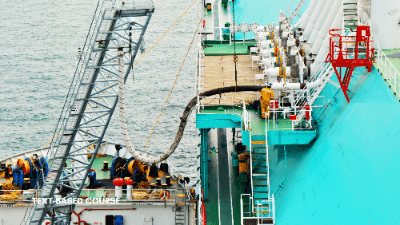
This course introduces the learner to the safety topics related to the production, storage, transportation, and vaporization of Liquefied Natural Gas (LNG). In-depth books can be written on LNG safety; this course is not all-inclusive.
This course should be considered a high-level starting point introduction to select topics related to LNG safety. LNG is widely used around the world. It is a very compact form of natural gas in liquid form. It is used on frigid days to supplement gas from the interstate pipelines and supply gas load centers like New York, Boston, and other major gas-load areas. Natural gas, the same as vaporized LNG, is the cleanest burning fossil fuel, as it contains the least amount of carbon of all the fossil fuels. Thus, many electric power plants now use natural gas or are converting from dirtier fossil fuels to natural gas or vaporized LNG.
Upon completion of this course, the learner should, at a high level, should have internalized the learning objectives below.
2 activities • 1 chapters • duration: 7 hours
** Mechanical Engineering and Process Engineering ** Dr. Vitale is a graduate of NYU Tandon School of Engineering (formerly NY Polytechnic University) with a B.S., M.S., and Ph.D. in Mechanical Engineering and an M.S. in Civil Engineering. He has been licensed as a P.E. in 6 states and keeps his P.E. licenses active in New York, Pennsylvania, and New Mexico. Dr. Vitale has worked in the natural gas and LNG industry for over 50 years. In 2004 he retired as Vice President and Chief Engineer over Gas Engineering and 28 Production facilities for KeySpan Energy across New York City, Long Island, Rhode Island, Massachusetts, and New Hampshire. During his employment with KeySpan, he often taught Thermodynamics, Heat Transfer, Fluid Dynamics, and other energy courses at NY Polytechnic University. From 2004 to the present, Dr. Vitale has focused on consulting for the Gas Industry with a specialty in training the industry’s human resources on how to make safety and reliability their major focus through understanding the technologies. More than half of Dr. Vitale’s consulting has been focused on training Liquefied Natural Gas (LNG) Operating personnel on generic and site-specific operations of their plants. Dr. Vitale has generated and delivered training materials for import terminals, export terminals, peak shavers, and portable LNG facilities. His courses have been both open-enrollment and plant-specific. He has trained clients in the U.S., Canada, Mexico, South America, Europe, Mid-East, and China. Dr. Vitale has also provided expert testimony for justifying asset (pipeline and service) replacement programs and new facilities (LNG or pipeline or compressors) for system reinforcements to meet the peak-day demands of the industry’s customers. Dr. Vitale’s passion is to train Gas Operators on their gas systems' safe, reliable, and efficient operation and develop a continuous learning culture.
