
search
Explore innovative low-carbon concrete technologies to build sustainable, eco-friendly structures.
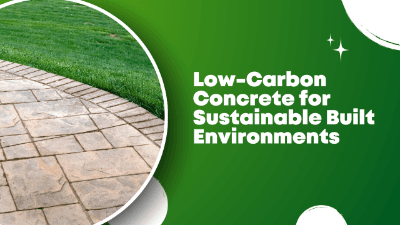
This course offers an in-depth exploration of low-carbon concrete, focusing on sustainable construction practices and reducing environmental impact. Students will learn about alternative materials and technologies, the benefits of limestone calcined clay cement (LC3), and the performance and durability of low-carbon concrete. By the end of the course, participants will have the knowledge to implement and promote sustainable concrete solutions in the built environment.
Key Topics:
This course is ideal for professionals in architecture or construction with a basic understanding of concrete technology who are eager to adopt sustainable practices.

At ProArchitect Academy, we specialize in providing advanced CPD engineering courses tailored for architectural professionals seeking to enhance their technical skills and maintain industry compliance. With a focus on both intermediate and expert-level content, we empower architects and engineers with cutting-edge knowledge in structural design, sustainability, and modern construction technologies. Our courses are developed by industry leaders with decades of experience, ensuring that every learning experience is practical, relevant, and applicable to real-world challenges. As a trusted institution, we are committed to fostering continuous professional growth, innovation, and excellence in the architectural engineering field. Whether you’re looking to stay ahead of the latest trends, refine your technical skills, or gain certification, ProArchitect Academy offers a pathway to success for professionals committed to their craft.
Jerry Luo, PhD, PE, is a licensed professional engineer in Ohio, Louisiana, and Texas, with over 15 years of diverse experience spanning higher education, research, and consulting in civil engineering and construction management. Renowned for his expertise in geotechnical engineering, he has published over 60 peer-reviewed research articles, significantly contributing to advancements in geotechnical risk assessment and infrastructure resilience. He also co-authored a widely recognized textbook on soil dynamics. Jerry has actively contributed to the global engineering community by serving on the editorial boards of multiple international journals and as a member of organizing committees for prestigious conferences. His work bridges academic excellence and industry practice, making a tangible impact on critical engineering projects. His dedication to mentorship and innovation reflects his commitment to shaping the next generation of civil engineers and advancing the profession through research, education, and practice.