Master essential risk mitigation strategies to safely navigate complex ground conditions and ensure structural integrity during tunnel cross passage excavation.
Tunnel cross passages are among the most complex and geotechnically demanding components of underground infrastructure projects. Constructed in confined environments and often through highly variable ground conditions, these connections require careful management of excavation methods, temporary support systems, groundwater, and interactions with existing tunnel structures. Inadequate ground characterisation, poor sequencing, or ineffective risk management can lead to significant safety hazards, construction delays, and increased project costs.
This practical course examines the geotechnical risks associated with tunnel cross-passage construction and the engineering strategies used to manage them throughout the project lifecycle. Participants will explore ground investigation techniques, excavation and support methods, groundwater control, monitoring systems, and construction-stage decision-making. The session provides practical guidance to help engineers improve safety, constructability, and project performance in challenging underground environments.
Key Topics Discussed:

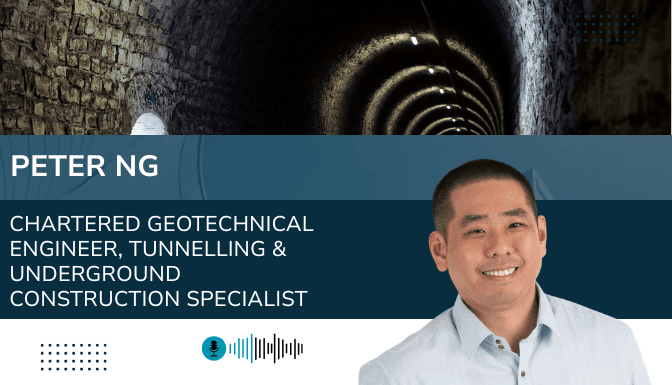
Chartered Geotechnical Engineer, Tunnelling & Underground Construction Specialist
Peter is a Chartered Engineer with over 17 years of expertise in geotechnical engineering and contract management. His extensive experience spans road header, drill and blast tunnelling, Earth Pressure Balance (EPB), Slurry Shield tunnelling, pipe-jacking, excavation and lateral support (ELS). Additionally, he excels in slope maintenance and ground investigation. Peter’s career encompasses both contractor and consultant roles, covering site management, design, tender bidding, contract administration and project delivery. His proven ability to deliver innovative, value-engineered solutions at all project stages underscores his commitment to excellence and innovation in the engineering field.
