
search
Information in the form of fact sheets for 36 advanced technologies for oil and gas exploration, drilling and completion, production, site restoration, and handling sensitive environments.
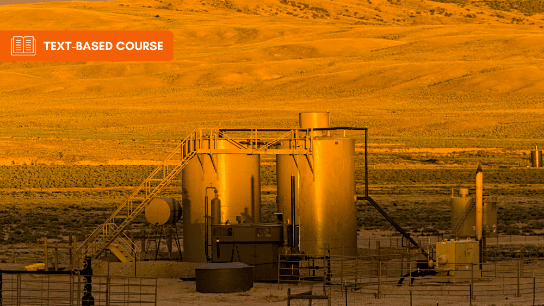
Advances in oil and gas exploration and production technologies have resulted in numerous economic and environmental benefits. This course provides information in the form of fact sheets for 36 advanced technologies for oil and gas exploration, drilling and completion, production, site restoration, and handling sensitive environments.
In this course, you need to review the material in the course content file, which is composed of technology fact sheets for the 36 advanced technologies described above. These fact sheets are part of the report, "Environmental Benefits of Advanced Oil and Gas Exploration and Production Technology," put out by U.S. DOE in 2000. Once you complete your course review, you need to take a multiple-choice quiz consisting of thirty-five (35) questions to earn 7 PDH credits. The quiz will be based on the material in the course content file.
Topics: At the conclusion of this course, the student will: Be familiar with four advanced technologies for oil and gas exploration and their economic and environmental benefits. Be familiar with sixteen advanced technologies for oil and gas drilling and completion, and their economic and environmental benefits. Be familiar with thirteen advanced technologies for oil and gas production, and their economic and environmental benefits. Be familiar with three advanced technologies for oil and gas drilling and production site restoration. Be familiar with four advanced technologies for oil and gas drilling and production in sensitive environments.
Intended Audience: for petroleum engineers, chemical engineers, geotechnical engineers and environmental engineers. An attendee of this course will gain knowledge about 36 advanced oil and gas exploration and production technologies.
Publication Source: US Dept. of Energy

Dr. Harlan Bengtson is an online PDH course provider of continuing education courses for professional engineers. Dr. Bengtson is a graduate of Iowa State University with B.S. and M.S. degrees and of the University of Colorado with a PhD. He is a licensed Professional Engineer in Missouri. Dr. Bengtson has spent 30 years in engineering education in teaching and administrative positions, including six years as Dean of Engineering at Southern Illinois University Edwardsville. Dr. Harlan H. Bengtson, PE 33 Grainey Drive Glen Carbon, IL 62034 Phone: (618) 406-6892 E-mail: hnkbengtson@yahoo.com PROFESSIONAL PROFILE Dr. Bengtson is a graduate of Iowa State University with B.S. and M.S. degrees and of the University of Colorado with a PhD. He is a licensed Professional Engineer in Missouri. He has spent 30 years in engineering education in teaching and administrative positions, including six years as Dean of Engineering at Southern Illinois University Edwardsville. His areas of expertise are environmental engineering, hydrology and hydraulics, engineering science and renewable energy systems. He has done regular consulting work while holding the academic positions. Prior to entering academia, Dr. Bengtson worked for Minnesota Mining & Manufacturing as a Product Development Engineer and for E. I. duPont deNemours as a Process Development Engineer. Dr. Bengtson has authored numerous publications, presentations and technical reports. He is currently active as a freelance technical writer, author of continuing education courses for Professional Engineers, and is the founder of www.engineeringexceltemplates.com and www.EngineeringExcelSpreadsheets.com, sites with the objective of providing inexpensive, easy to use Excel spreadsheets for a variety of engineering calculations.