
search
Revolutionizing Energy Storage with Cost-Effective Flow Batteries
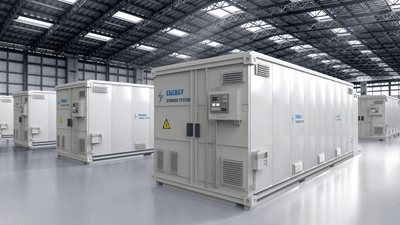
The ability to store large amounts of electrical energy is of increasing importance with the growing fraction of electricity generation from intermittent renewable sources such as wind and solar. Flow batteries show promise because the designer can independently scale the power (electrode area) and energy (arbitrarily large storage volume) components of the system by maintaining all electro-active species in fluids. Wide-scale utilization of flow batteries is limited by the abundance and cost of these materials. We have developed an approach to electricity storage in flow batteries using the aqueous redox chemistry of small, potentially inexpensive organic and organometallic molecules. This new approach may enable massive electrical energy storage at greatly reduced cost.

The Global Home of Chemical Engineers
At every stage of your career, AIChE Academy is the definitive resource engineers use to sharpen their professional skills. We offer up-to-date courses and webinars in chemical engineering, process and hydrogen safety, bioengineering, sustainability, professional development, and many more.

Gene and Tracy Sykes Professor of Materials and Energy Technologies
Michael J. Aziz has been a member of the faculty at what is now the Harvard John A. Paulson School of Engineering and Applied Sciences since he joined in 1986 and is now Gene and Tracy Sykes Professor of Materials and Energy Technologies. His recent research interests include novel materials and processes for energy technology and greenhouse gas mitigation. He is co-inventor of the organic aqueous flow battery and directs multi-investigator research programs on stationary electrical energy storage and porous electrodes. He is a Fellow of the APS, the MRS and the AAAS and is the co-recipient of the 2019 Energy Frontiers Prize from Eni.