
search
Master the science of coastal hydrogeology and implement effective engineering strategies to model, prevent, and mitigate saltwater intrusion in vulnerable freshwater aquifers.
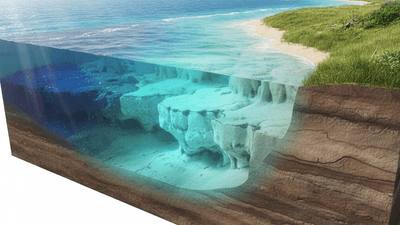
Global coastal populations rely heavily on groundwater, yet this vital resource is increasingly threatened by the encroachment of saline water. The course, Saltwater Intrusion into Freshwater Resources, provides a comprehensive technical overview of the physical processes, causes, and mitigation strategies associated with this geological phenomenon. Led by experts Christopher Rusomello and James Heiss, this content is designed for engineers, hydrologists, and planners seeking to understand the complex dynamics of coastal aquifers and the challenges of sustainable water management.
The curriculum begins by establishing the fundamental science of coastal groundwater, exploring the water cycle, Darcy’s Law, and the physics of flow. Learners will examine mass transport, diffusion, and the crucial role of fluid density in shaping the saltwater-freshwater interface. The course moves beyond theory to investigate the specific drivers of intrusion, distinguishing between natural events—such as storm surges, tides, and sea-level rise—and human-induced factors like groundwater over-pumping and infrastructure development. Through detailed case studies involving Cape Cod, Cape May, and the Floridan Aquifer system, participants will analyze real-world examples of how geological heterogeneity and water usage patterns impact aquifer salinity.
To conclude, the presentation outlines practical engineering and management solutions to prevent or reverse intrusion. Professionals will explore a range of prevention and mitigation techniques, categorized into "hard" engineering solutions and "soft" management approaches. By the end of this course, participants will be equipped with the knowledge to identify risks and evaluate strategies for protecting drinking water supplies.
Key learning outcomes include:

Online Courses for Engineers
HalfMoon Education is a nonprofit continuing education provider offering live webinars and on-demand courses for engineers, architects, landscape architects, land surveyors, attorneys, paralegals, accountants and others. Since 1996, we’ve helped thousands of professionals nationwide stay current with industry standards and codes, earn CE hours, and advance their expertise through practical, expert-led learning experiences. Learn more about us at: www.halfmoonseminars.org
Assistant professor of Hydrogeology in the Department of Environmental, Earth, and Atmospheric Sciences at the University of Massachusetts – Lowell
Dr. Heiss’s research entails coastal groundwater-surface water interactions, climate change and sea level rise impacts to coastal groundwater resources, and chemical fluxes along the land-sea transition zone. His current research focuses on the hydrologic forcings (waves, tides, currents, extreme precipitation, and storm surge) that move water and chemicals between aquifers and nearshore surface water bodies. He explores these hydrologic processes using field experiments, numerical models, and quantitative synthesis of large datasets. Prior to joining UMass Lowell, Dr. Heiss was a postdoctoral fellow at the National Academy of Sciences in Washington, DC. He holds M.S. and Ph.D. degrees in Geology from the University of Delaware.
Hydrogeologist in the University of Rhode Island Department of Geosciences
Dr. Russoniello is a hydrogeologist in the University of Rhode Island Department of Geosciences. His work focuses on coastal groundwater, saltwater intrusion, surface water/groundwater interactions, cold-region hydrology, and the impacts of rising seas and changing climate on freshwater resources. Prior to joining URI, he earned M.S. and Ph.D. degrees in Geology from the University of Delaware, completed a postdoctoral fellowship at Syracuse University, and was an Assistant Professor at West Virginia University. Dr. Russoniello has served on 15 graduate committees, mentored many undergraduate researchers, and is a current and former mentor to two NSF EAR postdoctoral fellows. Teaching interests focus on the coast, its complex processes, the interaction between the ocean and groundwater, and environmental data skills. Outside work, Dr. Russoniello enjoys playing on water (liquid and frozen) and spending time with his wife, daughter, and dog.