
search
This course presents a systematic assessment of the potential for wind power to support water utility operation, with the objective of identifying promising technical applications.
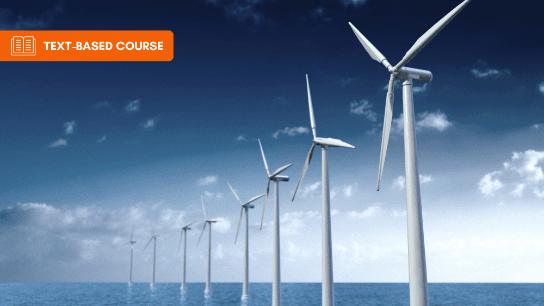
Municipal water and wastewater operations are energy-intensive. Energy used by water systems account for more than 3 percent of total electric demand. Energy inputs to water systems occur at different locations in the system, from initial extraction of water from surface or groundwater sources, through conveyance, storage, treatment, distribution, end-use, wastewater collection and treatment, and discharge or reuse. These important energy inputs to water systems are sometimes located in places with significant wind energy potential. Although the focus of this course is municipal systems, many water supply systems provide service to all types of users. Where wind energy systems can contribute to energy inputs, and particularly to the energy required to lift and move water, important overlaps in benefits between municipal and other uses occur.
This course presents a systematic assessment of the potential for wind power to support water utility operation, with the objective of identifying promising technical applications. The first part of the course describes the current situation that municipal providers face with respect to energy and water. The second part describes the progress that wind technologies have made in recent years to become a cost-effective electricity source. The third part describes the analysis employed to assess potential for wind power in support of water service providers, as well as two case studies. The course concludes with results and recommendations.
Topics: Challenges for U.S. water supply and wastewater treatment Stresses on municipal water service providers Energy requirements Wind energy market Energy market drivers Energy market economics Implementation issues Wind-powered water service applications Screening for water service opportunities in windy U.S. areas Locations with wind-water potential Case studies
Intended Audience: electrical, mechanical, civil, energy, chemical, environmental, construction, and industrial engineers. However, this course could appeal to engineers of other disciplines as well.
Publication Source: US Dept. of Energy (National Renewable Energy Laboratory)

Civil Engneering faculty member for 27 years
Dr. Rossow is a graduate of the University of Michigan with B.S., M.S., and Ph.D. degrees. He is a licensed Professional Engineer in the State of Illinois. He taught civil engineering for over 35 years, including six years at Washington University in St. Louis and 29 years at Southern Illinois University Edwardsville, where he was the Chair of the Civil Engineering Department for ten years. His areas of expertise are in civil engineering and mechanics. He has consulted for various organizations, including government agencies and an international offshore drilling company. He has published numerous technical journal articles and technical reports for a variety of governmental agencies and private sector organizations. Mark P. Rossow, PE, PhD Licensed Professional Engineer in State of Illinois License No. 062.040560 Dr. Rossow is a graduate of the University of Michigan with B.S., M.S., and Ph.D. degrees. He taught civil engineering for over 35 years, including six years at Washington University in St. Louis and 29 years at Southern Illinois University Edwardsville, where he was the Chair of the Civil Engineering Department for ten years. His areas of expertise are in civil engineering and mechanics. He has consulted for various organizations, including government agencies and an international offshore drilling company. He has published many journal articles and technical reports.