
search
Master the core mechanics, aerodynamics, and cutting-edge technologies required to design and optimize the next generation of sustainable wind turbines.
Wind energy has become a cornerstone of the modern energy transition, with utility-scale wind farms supplying a growing share of electricity generation across the United States and around the world. As turbine technology continues to advance, engineers are challenged to integrate increasingly sophisticated systems that combine aerodynamics, structural engineering, materials science, power electronics, controls, and grid integration into reliable, high-performance renewable energy assets.
This course provides a systems-level understanding of modern wind energy systems and the engineering innovations driving the next generation of turbine design. Participants will explore the key components and design principles of utility-scale wind turbines, including rotor aerodynamics, drivetrain configurations, tower and foundation engineering, control systems, grid interconnection requirements, and emerging offshore wind technologies. Through practical engineering examples and industry standards, attendees will gain valuable insight into how wind turbines are designed, certified, and deployed to deliver safe, efficient, and resilient renewable energy infrastructure.
Key Topics Discussed:

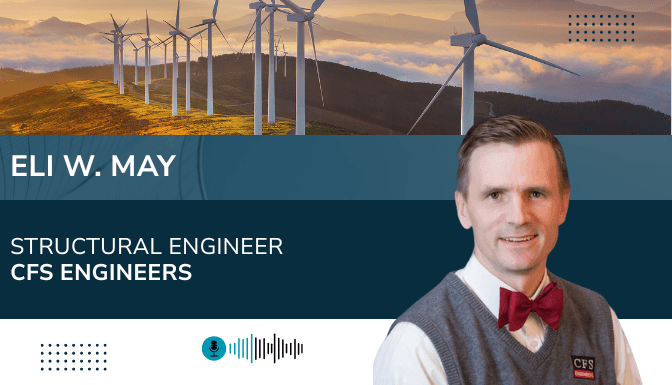
Structural Engineer | CFS Engineers
Eli is from Auburn, KS, graduated from Mission Valley High School in 2001 and earned a degree in Mechanical Engineering from K-State in May 2007. During university, he worked as a machinist and did CAD design. After graduating, he went on to Spirit Aerosystems in Wichita as a Structural Stress Engineer in 2008, contributing to projects like the Cessna Columbus and Bombardier C-Series Pylon to ensure FAA certification and collaborating with international teams. In 2013, he moved to Germany to work as a Structural Analyst for Premium Aerotec GmbH, focusing on the Airbus A350 fuselage. Then to Enercon in northern Germany, where he served as a Structural Stress Engineer in the Wind Turbine Design Department and later took on roles in technical sales and product management. In 2021, he returned to the Topeka area and has been working in the Structural Department of CFS Engineers, performing bridge design, analysis, and inspection while also helping on other civil engineering projects as needed within the company.