
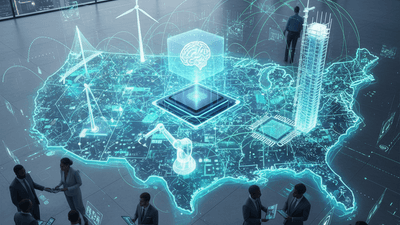



American engineering is currently caught in a high-stakes tug-of-war. On one end, the nation is racing to build the physical infrastructure required to support the next generation of artificial intelligence—massive, power-hungry data centers that require unprecedented levels of electrical and structural engineering. On the other end, legacy civil infrastructure is demanding urgent attention in the face of extreme weather and aging materials. Caught in the middle is a workforce stretched to its limits by a persistent, compounding talent shortage.
To bridge this gap, leading engineering firms are pivoting from traditional hiring strategies to operational multipliers. Instead of merely trying to hire more engineers, they are asking a critical question: How can we make our existing engineers exponentially more effective? The answer is emerging in the form of AI-enabled knowledge management platforms, a technological leap that is turning siloed, decades-old project data into instant, actionable institutional memory.
The Dual Pressures: Hyper-Growth and Critical Infrastructure
The urgency driving this technological adoption is visible across both the private and public sectors. The most glaring example of hyper-growth is the rapid expansion of AI data centers across the United States. While much of the public discourse focuses on the massive power generation required to run these facilities, power isn't the only electrical challenge.
The Data Center Bottleneck
Electrical systems can account for up to 45% of an AI data center's total cost. The sheer complexity of designing these systems—balancing massive loads, ensuring redundancy, and integrating advanced cooling mechanisms—requires highly specialized electrical engineering expertise. However, the U.S. is facing a severe shortage of both electrical engineers and skilled electricians capable of executing this work. This talent gap is rapidly becoming the primary bottleneck threatening to throttle the nation's computing power ambitions.
The Solution: Institutional Memory on Demand
Faced with these compounding pressures, engineering giant Worley has introduced a compelling blueprint for the future of the industry. In a strategic move to optimize its workforce, Worley recently expanded its AI platform, developed in partnership with Bloomfire, to its industrial project clients.
The premise of the platform is elegantly simple but operationally profound: it enables engineers to efficiently retrieve design decisions, technical specifications, and lessons learned from a vast repository of past industrial projects. In traditional engineering workflows, finding the rationale behind a specific design choice made five years ago on a similar project might require days of digging through archived emails, fragmented server folders, or tracking down the original engineer—if they are even still with the company.
"By deploying AI-enabled knowledge systems, engineering firms are effectively preventing their teams from reinventing the wheel. They are connecting junior engineers with the accumulated wisdom of their senior counterparts, drastically reducing research time and accelerating project delivery."
This deployment highlights a growing, critical trend within the engineering sector: the transition from passive data storage to active, AI-curated knowledge retrieval. It allows an engineer tackling a complex electrical routing issue in a new AI data center to instantly query how a similar thermal or load-balancing challenge was solved in a previous build, complete with the context of what worked and what failed.
High Stakes: From Levees to Global Defense
The need for rapid, informed decision-making extends far beyond corporate data centers; it is a matter of public safety and national security. The physical realities of U.S. infrastructure require engineers to act with both speed and historical context.
Consider recent events in Arkansas, where the U.S. Army Corps of Engineers (USACE) Little Rock District had to initiate emergency reinforcements on the Village Creek Levee following severe storm damage. When executing urgent flood risk reduction capabilities to protect local residents and farmland, engineers do not have the luxury of extended research phases. They must rely on historical hydrological data, past reinforcement strategies, and immediate environmental assessments. AI knowledge platforms can instantly surface decades of USACE levee repair data, providing on-the-ground teams with optimized, historically validated reinforcement strategies in minutes.
Similarly, the legacy of American engineering relies heavily on the accumulated expertise of specialized groups. Recently, Rear Adm. Jeff Kilian, commander of Naval Facilities Engineering Systems Command (NAVFAC), celebrated the 159th birthday of the Civil Engineer Corps and the 84th birthday of the Seabees. Highlighting their pioneering operations—from Antarctic bases to critical global infrastructure assessments—the Navy relies on a deep well of specialized civil engineering knowledge. As veteran engineers retire, capturing their experiential knowledge into AI-searchable databases ensures that the next generation of Seabees and civil engineers can access a century and a half of tactical infrastructure wisdom.
The 2026 Talent Paradigm: Builders of the AI Bridge
Building and maintaining these advanced knowledge systems requires a specific type of talent, fundamentally shifting the software engineering landscape. According to a recent analysis of the software engineering job market for 2026, overall tech hiring has become highly selective. Companies are no longer stockpiling generalist coders; instead, there is a intense demand for specialized roles.
Engineering firms are actively hunting for professionals skilled in AI and machine learning, backend development with robust cloud experience, and cybersecurity. Crucially, firms are looking for software engineers who possess a blend of technical depth and practical business understanding. They need developers who can look at a civil engineer's workflow, understand the constraints of a project site, and build an AI retrieval tool that delivers measurable results—like the Worley/Bloomfire platform—without disrupting the engineer's natural process.
Traditional vs. AI-Enhanced Engineering Workflows
To understand the operational impact of these systems, it is helpful to compare the traditional approach to knowledge management with the new AI-enhanced paradigm.
| Workflow Phase | Traditional Knowledge Retrieval | AI-Powered Knowledge Retrieval |
|---|---|---|
| Problem Identification | Engineer encounters an issue and relies on personal memory or asks immediate colleagues. | Engineer queries the AI platform using natural language to describe the specific technical challenge. |
| Data Gathering | Manual search through fragmented shared drives, legacy project files, and archived emails (Hours/Days). | AI instantly scans the entire corporate history, surfacing relevant design decisions and past solutions (Seconds/Minutes). |
| Contextualization | Engineer must read through raw documents to piece together why a decision was made. | AI summarizes the context, highlighting "lessons learned" and potential pitfalls based on historical data. |
| Execution | High risk of repeating past mistakes or "reinventing the wheel," extending project timelines. | Accelerated execution based on validated past successes, significantly reducing billable hours spent on research. |
Strategic Imperatives for Engineering Leaders
For U.S. engineering firms looking to remain competitive in an era defined by massive project pipelines and tight labor markets, the adoption of AI knowledge platforms is no longer optional. Leaders must consider the following strategic imperatives:
- Audit Existing Knowledge Silos: Before deploying AI, firms must identify where their most valuable data lives. Is it trapped in legacy CAD files, forgotten PDF reports, or the email inboxes of senior partners?
- Invest in Data Structuring: AI is only as good as the data it consumes. Firms must invest in backend cloud infrastructure and data hygiene to ensure their historical project files are clean, secure, and accessible to machine learning algorithms.
- Bridge the Generational Divide: Use AI platforms not just as search engines, but as mentoring tools. By surfacing the work of veteran engineers to new hires, firms can accelerate the onboarding process and mitigate the impact of the "silver tsunami" of retiring experts.
- Prioritize Security and IP Protection: As engineering firms handle critical infrastructure and proprietary designs, any AI platform deployed must have rigorous cybersecurity protocols to protect intellectual property and comply with federal regulations (especially for contractors working with USACE or NAVFAC).
Conclusion: The Competitive Edge of Connected Knowledge
The U.S. engineering sector is navigating a perfect storm of unprecedented demand and constrained human resources. Whether the task is designing the complex electrical arteries of a next-generation AI data center or rushing to reinforce a failing levee before the next storm, the margin for error is shrinking, and the demand for speed is accelerating.
By following the lead of firms like Worley and deploying AI-driven knowledge platforms, the industry can unlock its most underutilized asset: its own history. The engineering firms that will dominate the next decade will not necessarily be the ones with the highest headcount, but the ones that can most effectively put the collective genius of their entire organizational history at the fingertips of every single engineer.