
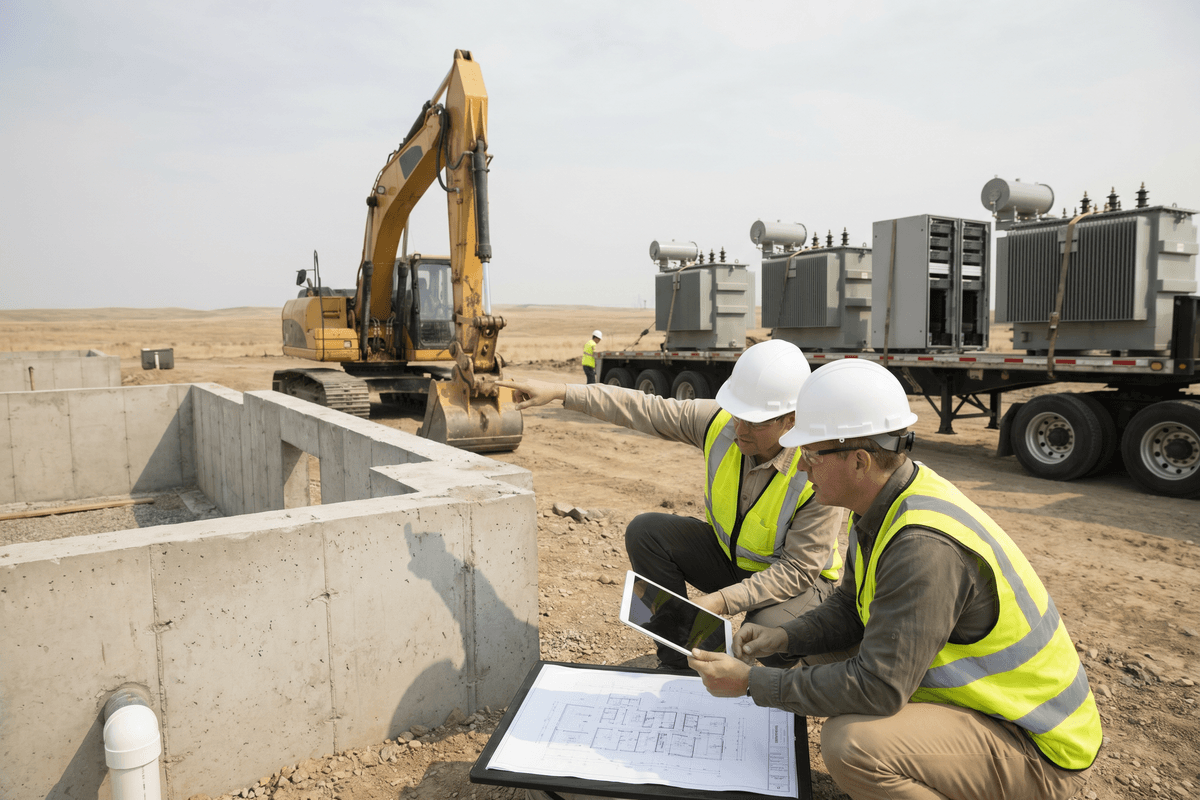



The United States engineering sector has entered a fascinating era of dual mandates. On one end of the spectrum, the industry is tasked with designing the invisible, high-density digital infrastructure required to power the next generation of artificial intelligence. On the other, it remains firmly anchored in the physical world, wrestling with the logistical complexities of tearing down and rebuilding century-old maritime bridges. For engineering leaders in 2026, success is no longer defined by choosing between the digital frontier and heavy civil legacy—it is defined by executing both simultaneously.
The $1 Billion Digital Bedrock: Engineering for AI
The sheer physical footprint required to support advanced artificial intelligence is staggering. This reality was underscored by the recent announcement from the U.S. Department of Energy and Japan's MEXT, detailing a historic $1 billion joint investment to advance AI science and technology challenges. While software developers celebrate the algorithmic possibilities, structural, electrical, and mechanical engineers are reading between the lines: this is a massive infrastructure mandate.
Expanding the computing infrastructure needed for next-generation research requires fundamentally rethinking how we build data centers. The thermal loads generated by advanced AI clusters are pushing traditional HVAC systems to their absolute limits, requiring liquid cooling architectures, specialized structural floor loading, and unprecedented power density.
"A billion-dollar investment in AI research is functionally a billion-dollar investment in advanced mechanical, electrical, and power-generation engineering. The algorithms cannot run without the concrete, the copper, and the cooling."
Powering the Compute
The unspoken challenge of the U.S.-Japan AI computing pact is energy consumption. As computing infrastructure expands, engineering firms are increasingly tasked with integrating these high-demand facilities with advanced power generation—including next-generation nuclear and renewable microgrids—to ensure grid stability. The engineering value chain is shifting from merely designing a building to designing an entirely self-sustaining compute ecosystem.
The Heavy Civil Reality: Precision in the Physical World
While international billions flow into digital infrastructure, the foundational elements of American commerce—our waterways and bridges—demand equally rigorous engineering execution. The digital economy still relies on physical logistics.
A prime example of this ongoing physical modernization is the upcoming demolition and construction of a new span for the Deep Creek Bridge in Virginia. As announced by the U.S. Army Corps of Engineers, Norfolk District, this project requires a highly coordinated four-week closure to maritime traffic. For civil and structural engineers, projects of this nature represent the pinnacle of logistical risk management.
- Phased Demolition: Safely dismantling legacy structures over active waterways requires precise load calculations and environmental containment.
- Maritime Logistics: A four-week closure mandates an unforgiving project schedule. Any delay in the critical path cascades into major economic disruptions for maritime commerce.
- Next-Gen Materials: The new span must be engineered for modern load requirements, utilizing advanced composites and high-strength concrete to extend the asset's lifecycle beyond that of its predecessor.
The Deep Creek Bridge project serves as a vital reminder: while AI may optimize our supply chains, it takes heavy civil engineering to physically keep those supply chains moving.
Bridging the Disciplines: Recognizing Aerospace and Advanced Engineering Talent
Whether designing high-density compute facilities or executing complex bridge replacements, the bottleneck for the U.S. engineering sector remains human capital. Retaining top-tier talent requires cultivating a culture of innovation and visible recognition.
This dynamic is highly visible in the aerospace sector, an industry that sits at the intersection of heavy physical manufacturing and advanced computational modeling. Recently, engineers from General Atomics Aeronautical Systems, Inc. (GA-ASI) were awarded by the San Diego Section of the American Institute of Aeronautics and Astronautics (AIAA) across three categories. Recognizing outstanding achievements in aerospace engineering and management is not just about corporate prestige; it is a critical retention strategy in a hyper-competitive labor market.
The engineers pushing the boundaries at GA-ASI are the end-users of the massive computing infrastructure the DOE is currently funding. Their work in fluid dynamics, materials science, and autonomous systems relies heavily on the AI and compute power that structural and MEP engineers are currently building facilities to house. It is a deeply interconnected ecosystem.
Comparing the Dual Mandates of 2026
To understand the current bifurcation and convergence of the U.S. engineering market, we must look at the distinct operational profiles of these two major investment tracks:
| Metric | Digital/AI Infrastructure (e.g., DOE/Japan Pact) | Heavy Civil Infrastructure (e.g., Deep Creek Bridge) |
|---|---|---|
| Primary Disciplines | MEP, Power Engineering, Structural (High-Density) | Civil, Geotechnical, Structural, Marine |
| Core Challenges | Thermal management, power grid integration, latency | Environmental containment, traffic/maritime logistics, weather |
| Funding Mechanisms | Federal R&D grants, International Pacts, Private Tech Capital | State DOTs, USACE, Federal Infrastructure Bills |
| Lifecycle Focus | Rapid technological obsolescence (5-10 year upgrades) | Generational durability (50-100 year lifespans) |
The Path Forward: Engineering the Convergence
As we navigate the latter half of the 2020s, engineering firms can no longer operate in silos. The electrical engineer designing the cooling system for a billion-dollar AI supercomputer and the civil engineer sequencing the demolition of a maritime bridge are part of the same macro-economic imperative: upgrading American capacity.
The U.S.-Japan AI partnership signals a massive influx of capital into highly specialized facility engineering, demanding rapid innovation in power and thermal management. Simultaneously, the relentless drumbeat of infrastructure modernization, spearheaded by agencies like the USACE, ensures that traditional dirt-and-steel engineering remains the backbone of the economy. Meanwhile, the celebrated achievements of aerospace engineers remind us of the incredible innovations these infrastructures ultimately support.
For engineering executives, the strategic mandate is clear. Diversify your portfolio to capture both digital infrastructure growth and heavy civil modernization. Invest heavily in the continuing education of your workforce, ensuring your teams understand how high-compute requirements impact physical design. By embracing this convergence, the U.S. engineering sector will not just build the future—it will power the minds that design it.