
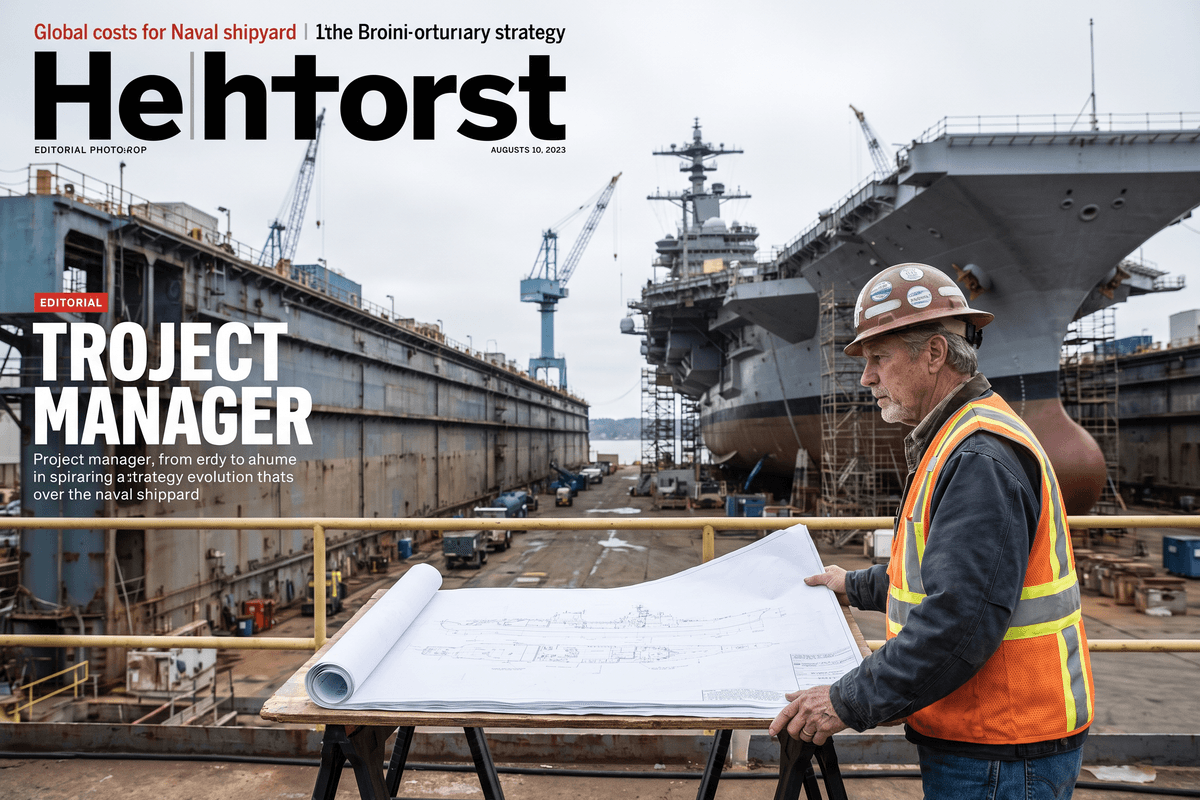



What began in 2018 as a 20-year, $21 billion blueprint to modernize the United States Navy’s aging maritime maintenance backbone has officially crossed into an unprecedented capital tier. According to a landmark assessment by the Government Accountability Office (GAO), the total price tag for the Navy’s Shipyard Infrastructure Optimization Program (SIOP) is now projected to exceed $200 billion. For the American engineering and heavy civil construction sectors, this staggering upward revision is not merely a bureaucratic line-item adjustment; it is a profound testament to the compounding technical, geotechnical, and logistical complexities inherent in rebuilding century-old industrial waterfront infrastructure while maintaining 24/7 operational readiness for nuclear-powered fleets.
The Anatomy of Scope Escalation: Why Initial Baselines Fractured
When the Navy initially conceptualized SIOP, the program aimed to holistically reconfigure four critical installations: Norfolk Naval Shipyard in Virginia, Portsmouth Naval Shipyard in Maine, Puget Sound Naval Shipyard in Washington, and Pearl Harbor Naval Shipyard in Hawaii. The original scope was built around three interconnected pillars:
- Dry-dock recapitalization: Deepening, extending, and hardening dry docks to accommodate incoming Virginia-class attack submarines (including the larger Block V configuration with the Virginia Payload Module), Columbia-class ballistic missile submarines, and Gerald R. Ford-class aircraft carriers.
- Facility layout and workflow optimization: Demolishing disjointed, World War II-era industrial footprints and replacing them with modern, consolidated manufacturing, assembly, and maintenance flow lines to slash transit time for personnel and materials.
- Capital equipment modernization: Replacing obsolete shoreside crane networks, heavy-lift utilities, electrical microgrids, and dry-dock pumping systems with digitalized, resilient infrastructure.
However, the GAO's comprehensive review reveals that early estimates drastically undercounted the true cost of marine sub-surface work, environmental remediation, and the hyper-inflationary pressures hitting high-grade structural steel and marine-grade, high-density concrete. Furthermore, maintaining nuclear security and operational throughput during heavy demolition and deep foundation drilling created massive schedule and phasing overheads that traditional civilian megaprojects rarely encounter.
"Initial program estimates failed to account for the full engineering complexity of excavating into unknown geotechnical strata adjacent to active marine channels while simultaneously maintaining zero-tolerance nuclear safety boundaries." — GAO Infrastructure Analysis Synthesis
The Marine and Geotechnical Engineering Crucible
At the center of SIOP’s soaring costs lies the sheer engineering difficulty of modern dry-dock construction. Dry docks are not passive concrete basins; they are massive, dynamic hydraulic machines subjected to extreme hydrostatic uplift, seismic loading, tidal surges, and concentrated vessel point loads exceeding tens of thousands of tons.
Subsurface Anomalies and Deep Foundation Engineering
Each of the four public shipyards presents distinct, highly adverse geotechnical challenges that have blown past early contingency models:
- Portsmouth (Kittery, ME): Constructing the multi-mission Dry Dock 1 super-flood basin required extensive underwater bedrock blasting, micro-piling, and precision rock-anchoring in a dynamic estuarine tidal current, demanding custom underwater concrete placement methods.
- Pearl Harbor (Oahu, HI): Dry Dock 5—the largest single contract in the Navy’s history at nearly $3.4 billion—requires constructing a massive, watertight enclosure over complex volcanic basalt, coral formations, and high-permeability marine sediment. Contractors must sink massive concrete drilled shafts and tremie concrete seal slabs deep into the seabed.
- Puget Sound (Bremerton, WA): Situated in a severe seismic zone within the Cascadia Subduction Zone, dry-dock upgrades require seismic stability retrofits, deep soil mixing, and post-tensioned tieback anchors to prevent liquefaction and structural collapse during a major earthquake.
- Norfolk (Portsmouth, VA): Confronted with sea-level rise and recurrent storm surge vulnerabilities, dry-dock walls must be raised, flood barriers integrated, and centuries-old wooden pilings and contaminated marsh soils methodically remediated.
| Shipyard Location | Primary Engineering Focus | Key Technical Constraints | Critical Vessel Target |
|---|---|---|---|
| Pearl Harbor (HI) | New Graving Dry Dock 5 | Porous basalt geology, seismic design, oceanic supply chain logistics | Virginia-class Submarines |
| Portsmouth (ME) | Dry Dock 1 Super-Flood Basin & Multi-Bay Facility | High-tidal estuary, dense granite blasting, extreme freeze-thaw cycles | Los Angeles & Virginia-class Overhauls |
| Puget Sound (WA) | Seismic Hardening & Carrier Dry Dock Recapitalization | Cascadia subduction seismic risk, soil liquefaction, environmental runoff | Ford-class Carriers, SSBN Submarines |
| Norfolk (VA) | Dry Dock 8 Upgrades & Waterfront Flood Resilience | Severe coastal flooding, high water table, high industrial density | Ford-class Carriers, Attack Submarines |
The Nuclear & Industrial Systems Integration Challenge
Civil execution is only half the battle. Unlike commercial shipyard developments, SIOP installations must integrate sophisticated nuclear support facilities (NSFs) directly into the dry-dock envelope. This requires specialized mechanical, electrical, and plumbing (MEP) designs featuring redundant uninterruptible power supply (UPS) systems, radiation-shielded fluid transfer corridors, specialized defueling gantry interfaces, and blast-resistant structural enclosures.
Civil and structural engineers are collaborating with systems engineers to deploy advanced Building Information Modeling (BIM) and Civil Information Modeling (CIM) digital twins across the entire program. These digital models simulate the precise crane lifting paths, heavy modular transport movements, and temporary utility routings needed to construct new dry docks without disrupting adjacent active submarine overhaul cycles.
Supply Chain and Material Vulnerabilities
The scale of materials required across the $200 billion pipeline is severely stressing already tight domestic industrial supply chains:
- Marine-Grade Concrete: Demands low-heat, high-slag/fly-ash replacement mixes to prevent thermal cracking in massive, multi-foot-thick tremie placements while resisting aggressive chloride ion penetration.
- Heavy Caisson Fabrication: Massive steel floating dry-dock entrance gates requiring specialized shipbuilding steel, precision machining, and heavy ballast pumping controls.
- Specialty Electrical Infrastructure: High-voltage substations, frequency converters, and redundant shoreside power hookups capable of energizing aircraft carrier nuclear plants while in cold-iron status.
Strategic Implications for the U.S. Engineering and Construction Sector
The GAO’s $200 billion validation establishes SIOP as one of the largest sustained civil engineering programs in American history, rivaling the Interstate Highway System in programmatic longevity and technical density. For engineering firms, prime contractors, and specialty subcontractors, this paradigm shift demands immediate adjustments in how major defense infrastructure is scoped, bid, and managed.
Traditional Firm-Fixed-Price (FFP) contracting models have proven ill-suited for deep marine projects where underground conditions cannot be fully characterized prior to award. Consequently, the Navy and Naval Facilities Engineering Systems Command (NAVFAC) are leaning more heavily on alternative delivery mechanisms, including Early Contractor Involvement (ECI), Construction Manager at Risk (CMAR), and negotiated multi-phase design-build agreements to distribute risk equitably between the defense apparatus and private-sector engineering giants.
Furthermore, the program is driving a severe engineering talent competition. Firms capable of fielding licensed professional engineers with active security clearances, marine geotechnical expertise, and nuclear facility design credentials hold immense leverage in an industry already facing acute demographic shortages.
Looking Forward: Rebuilding the Arsenal of Naval Engineering
The $200 billion SIOP trajectory is a sobering reality check on the cost of deferred infrastructure maintenance. For decades, the nation's public shipyards operated on incremental patches and legacy layouts. Transforming them into automated, digitally integrated, and climate-resilient 21st-century production centers requires an engineering commitment that spans decades.
As NAVFAC and its industry partners push forward with the next wave of mega-contracts, the engineering community must focus on advanced constructability reviews, digital-twin construction management, and resilient material science. The modernization of America’s shipyards is no longer just a naval readiness issue—it is the definitive frontier for modern heavy civil and marine systems engineering.