



While hyper-scale data centers, multi-billion-dollar semiconductor fabs, and advanced nuclear facilities dominate national industry headlines, the true barometer of U.S. civil engineering health often lies far away from these mega-projects. In Q3 2026, a massive wave of distributed capital is flowing into regional infrastructure—specifically community athletic complexes, public park expansions, and localized transit corridors. For U.S. engineering firms, this "foundational backlog" provides a critical counterbalance to the high-risk, high-reward volatility of federal mega-projects.
This dynamic is currently playing out across the country, exemplified by two distinct yet thematically linked mobilizations: Kinsley Construction's recent groundbreakings on major public park and athletic complexes in Pennsylvania and Maryland, and King County Metro's commencement of the RapidRide I Line in Washington State. Together, these projects illustrate the sophisticated execution required for mid-market, community-integrated civil engineering.
The Kinsley Blueprint: Engineering the Modern Community Complex
The recent groundbreakings by Kinsley Construction in the Mid-Atlantic highlight a growing trend in municipal engineering: the transformation of standard public parks into highly engineered, multi-use athletic and recreational ecosystems. These are no longer simple grading and paving exercises. Today’s community complexes require rigorous geotechnical validation, advanced stormwater management, and specialized materials engineering.
Site Preparation and Stormwater Dynamics
When executing athletic complexes, civil engineers face strict tolerances for subgrade compaction and drainage. Synthetic turf fields and modern athletic courts require highly specific subsurface profiles to ensure rapid drainage during peak weather events while preventing differential settlement. Engineering teams must design dynamic stormwater management systems—often utilizing underground detention basins and permeable sub-bases—to meet stringent state environmental regulations without sacrificing usable surface area.
"The complexity of modern recreational infrastructure lies in what you don't see. Managing localized hydrology, mitigating soil volatility, and ensuring zero-runoff compliance in densely populated municipalities requires heavy civil expertise scaled to a community footprint."
Key engineering requirements for these projects typically include:
- Geotechnical Stabilization: Extensive soil testing and stabilization protocols to support heavy lighting stanchions, grandstands, and high-load retaining walls.
- Sustainable Drainage Systems (SuDS): Integration of bioswales, rain gardens, and engineered wetlands to naturally attenuate stormwater runoff.
- Utility Sequencing: Complex coordination of underground electrical duct banks for field lighting, specialized irrigation lines, and localized fiber optics for modern scoreboard and broadcasting capabilities.
The RapidRide Mandate: Linear Infrastructure in Active Urban Corridors
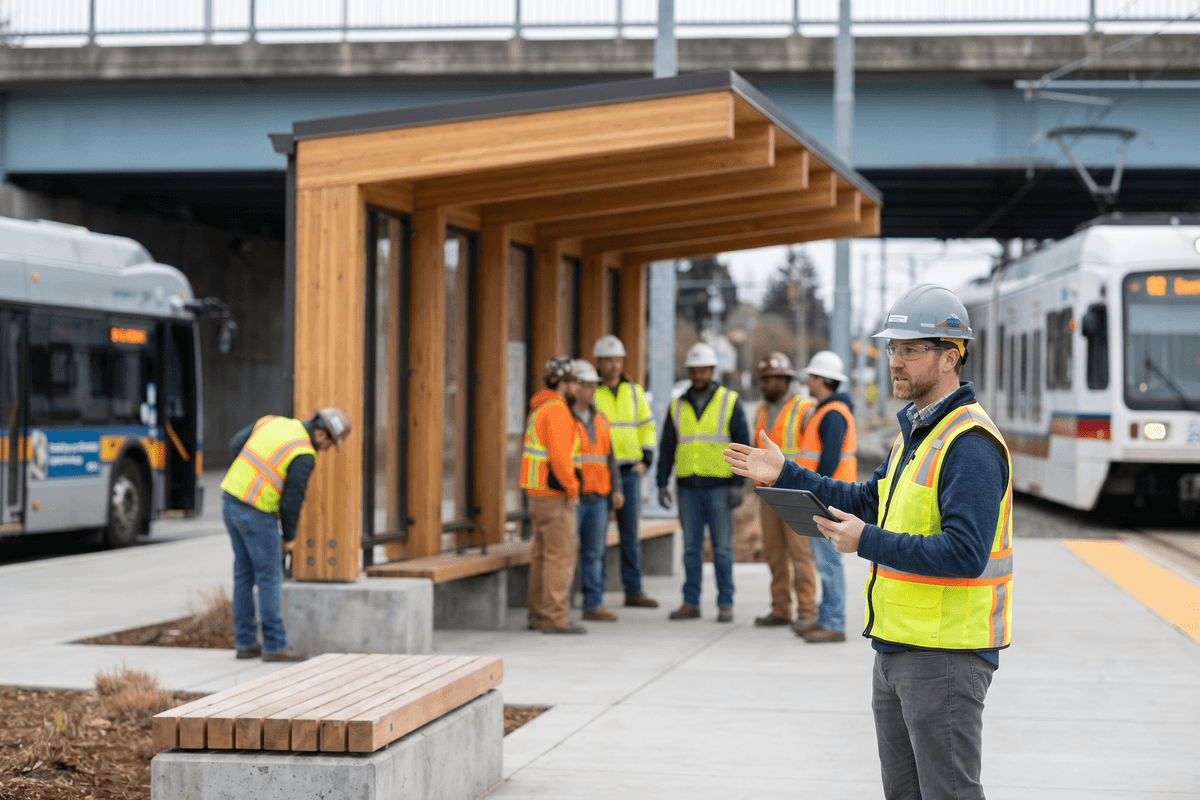
On the West Coast, the engineering challenges shift from localized site development to complex linear infrastructure. King County Metro’s RapidRide I Line represents a massive undertaking: 17 miles of new transit service connecting Renton, Kent, and Auburn. Unlike greenfield development, inserting high-capacity transit infrastructure into existing, heavily trafficked urban corridors is one of the most logistically demanding tasks in civil engineering.
Navigating the Right-of-Way (ROW) Matrix
The construction of the RapidRide I Line requires meticulous phasing. Civil engineering firms tasked with urban transit corridors must navigate a labyrinth of existing underground utilities—many of which are undocumented or inaccurately mapped. The engineering workflow prioritizes Subsurface Utility Engineering (SUE) to mitigate clash risks before heavy excavation begins.
Furthermore, the project involves significant upgrades to the physical streetscape, demanding tight integration between traffic engineers, civil designers, and heavy equipment operators. The process involves:
- Intelligent Transportation Systems (ITS) Integration: Trenching and installing fiber-optic networks to support transit signal priority (TSP) at dozens of intersections, allowing buses to communicate with traffic lights to reduce delays.
- Pavement Section Upgrades: Engineering high-durability concrete bus pads at station stops to withstand the severe rutting and dynamic loads imposed by continuous heavy vehicle braking and acceleration.
- ADA and Pedestrian Infrastructure: Complete redesigns of intersection geometries to ensure strict compliance with the Americans with Disabilities Act, requiring precise grading and the installation of tactile warning surfaces.
Strategic Resource Allocation: Balancing the Backlog
For U.S. engineering and construction firms, maintaining a balance between high-profile mega-projects and consistent regional infrastructure is a critical business strategy. Mid-market projects like Kinsley's athletic complexes and King County's RapidRide provide steady cash flow, lower individual project risk, and the opportunity to utilize regional supply chains and local labor pools.
As the industry faces persistent labor shortages, regional projects often serve as vital training grounds for junior engineers and project managers, allowing them to master full lifecycle project delivery—from permitting and site prep to final commissioning—on a manageable scale.
Comparing Infrastructure Typologies in 2026
| Metric | Mega-Projects (Fabs, Nuclear, AI Data Centers) | Regional Infrastructure (Transit, Parks) |
|---|---|---|
| Capital Source | Federal grants (CHIPS, IRA), massive private equity | Municipal bonds, state transit funds, local taxes |
| Risk Profile | High schedule/budget risk, complex jurisdictional hurdles | Lower financial risk, higher public interface risk |
| Engineering Focus | Advanced systems, structural scale, extreme power/cooling | Geotechnical, stormwater, traffic phasing, ADA compliance |
| Supply Chain | Global, highly specialized, vulnerable to macro shocks | Localized, standardized materials (concrete, asphalt, steel) |
Looking Ahead: The Resilience of the Mid-Market
As we move through the second half of 2026, the strategic value of community and regional infrastructure cannot be overstated. Projects like the Kinsley athletic complexes in Pennsylvania and Maryland, and the RapidRide I Line in Washington, represent the tangible, day-to-day improvements that directly impact public quality of life.
For engineering professionals, these projects require a unique blend of technical rigor and community-focused diplomacy. Mastering the execution of distributed infrastructure—optimizing local utility coordination, navigating municipal permitting, and minimizing disruption in active corridors—will remain a highly lucrative and deeply necessary core competency for top-tier U.S. design and construction firms in the years to come.