



For decades, the U.S. nuclear engineering sector has been handcuffed by a supply chain built for a bygone era—one reliant on massive, bespoke forgings, fragmented labor pools, and decade-long construction schedules. In 2026, that paradigm is finally fracturing. The catalyst for this shift isn't just advanced reactor physics; it is the aggressive convergence of aerospace-grade additive manufacturing, traditional heavy-industrial execution, and a rapid realignment of engineering leadership across the American South.
The transition of Small Modular Reactors (SMRs) from theoretical whitepapers to commercial deployment has officially entered its industrialization phase. Recent moves by key industry players signal that the bottleneck has moved from the Nuclear Regulatory Commission to the manufacturing floor. For U.S. engineering professionals, understanding this new supply chain architecture is no longer optional—it is the blueprint for the next generation of domestic energy infrastructure.
Forging a New Reality: The Additive Manufacturing Mandate
The most significant hurdle in scaling SMRs has been the procurement of critical components. Traditional nuclear reactors require massive, ultra-precise metal forgings that only a handful of facilities globally can produce, often resulting in lead times stretching into years. To bypass this, U.S. SMR developers are turning to advanced manufacturing.
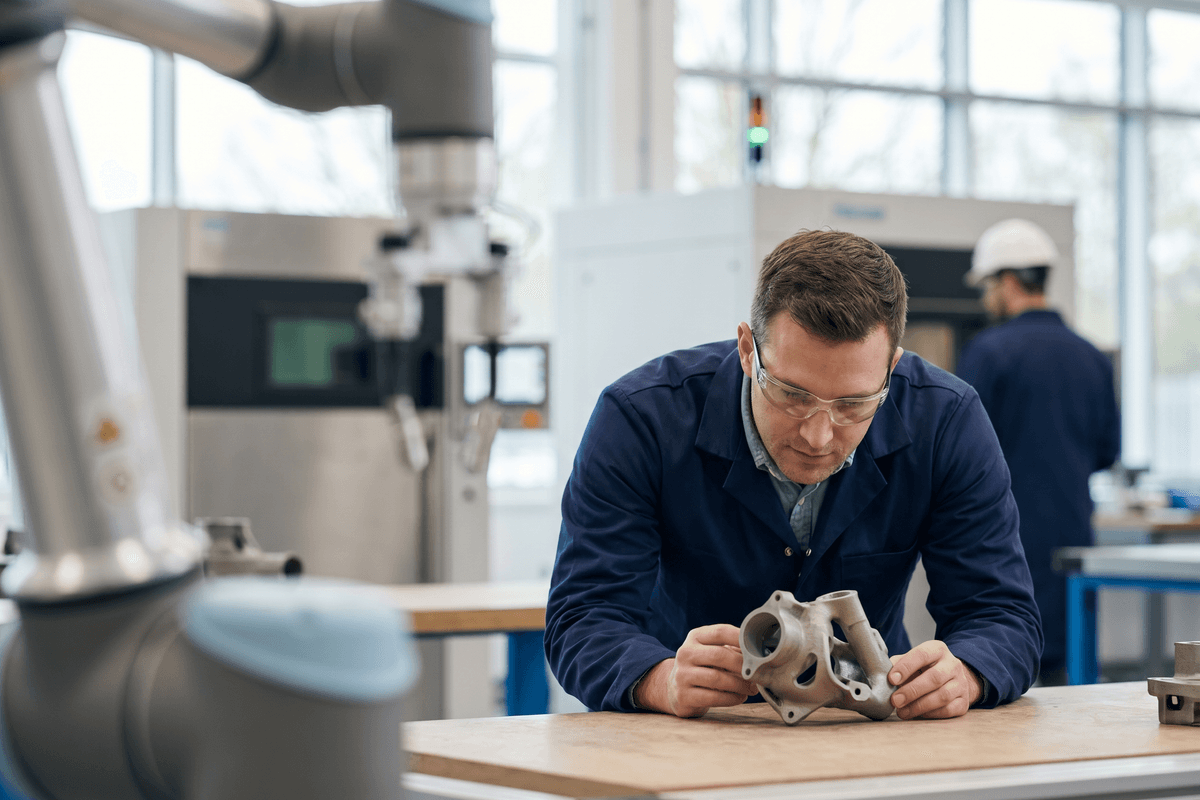
This shift was cemented recently when U.S. engineering and construction firm Day & Zimmermann, alongside metal additive manufacturer Sciaky, announced strategic partnerships to support SMR development. Sciaky's Electron Beam Additive Manufacturing (EBAM) technology is a game-changer for the nuclear sector. By utilizing a wire-fed 3D printing process, EBAM can produce large-scale, high-value metal parts—such as titanium and refractory alloys—at a fraction of the time and cost of traditional forging and casting.
"The integration of wire-fed additive manufacturing into the nuclear supply chain fundamentally alters the critical path of reactor construction. We are moving from a 'build-to-order' megaproject mentality to a rapid-prototyping and continuous-production model."
The Engineering Mechanics of EBAM in Nuclear
For materials and structural engineers, the application of EBAM in nuclear environments requires a rigorous re-evaluation of metallurgical standards. Unlike traditional forgings, which rely on subtractive machining, 3D-printed reactor components must be certified for isotropic strength, radiation resistance, and thermal fatigue under extreme operational loads. The partnerships currently forming are heavily focused on establishing these new ASME (American Society of Mechanical Engineers) codes and quality assurance protocols for 3D-printed nuclear parts.
Day & Zimmermann: Bridging the Gap Between Factory and Site
While Sciaky represents the technological leap, Day & Zimmermann represents the execution reality. The promise of SMRs is that they are "modular"—built in a factory and assembled on-site. However, the site assembly, balance-of-plant engineering, and regulatory compliance still require immense traditional engineering, procurement, and construction (EPC) expertise.
Day & Zimmermann's involvement highlights a critical trend: the necessary marriage of next-generation tech startups with legacy nuclear construction firms. Traditional EPCs hold the institutional knowledge of union labor management, site safety protocols, and NRC compliance. By partnering early with SMR developers and manufacturing innovators, these legacy firms are securing their positions as the primary integrators of the 2026 nuclear renaissance.
The Human Capital Pivot: Texas and the Southeast
Technology and partnerships alone cannot build infrastructure; it requires a specialized, highly mobilized workforce. As the SMR supply chain industrializes, we are witnessing a distinct geographic shift in engineering talent, moving away from traditional coastal tech hubs and concentrating in the energy-dense regions of the U.S. South.
According to Engineering News-Record's June 2026 tracking of leadership movements, there has been a significant surge in executive promotions and strategic engineering hires across Texas and the Southeast. This is not merely a reshuffling of traditional oil and gas personnel. These regions are actively absorbing talent to support advanced energy manufacturing, grid modernization, and SMR deployment.
Why the Southeast is Becoming the SMR Hub
- Legacy Nuclear Infrastructure: The Southeast already hosts a significant portion of the U.S. commercial nuclear fleet (e.g., Plant Vogtle in Georgia). The regional workforce is already culturally and technically acclimatized to nuclear standards.
- Manufacturing Proximity: The "battery belt" and advanced manufacturing corridors stretching from Texas through Tennessee and the Carolinas provide the ideal industrial ecosystem for SMR factory production.
- Regulatory Climate: State-level utility commissions in these regions have shown a higher willingness to incorporate advanced nuclear into their long-term integrated resource plans (IRPs) to meet surging industrial and AI-driven power demands.
Comparing the Paradigms: Traditional vs. Advanced Nuclear
To understand the depth of this shift, engineering leaders must look at how the SMR model upends traditional project delivery metrics:
| Project Metric | Traditional Nuclear (Gen III+) | SMR & Advanced Nuclear (Gen IV) |
|---|---|---|
| Component Sourcing | Custom ultra-heavy forgings (Global supply chain) | Additive manufacturing & modular fabrication (Domestic) |
| Lead Times | 3 to 5+ years for critical components | 6 to 12 months via EBAM and 3D printing |
| Labor Focus | Heavy on-site civil construction & field welding | Factory floor QA/QC & rapid on-site module integration |
| Geographic Hubs | Site-specific megaprojects | Texas & Southeast manufacturing corridors |
Strategic Imperatives for U.S. Engineering Firms
The industrialization of the SMR supply chain presents both immense opportunity and distinct risk for U.S. engineering firms. To capitalize on this billions-dollar market, firms must adapt their operational strategies immediately:
- Upskill in Additive Metallurgy: Structural and mechanical engineers must become fluent in the properties, testing, and certification of 3D-printed metals. Familiarity with ASME Section III codes as they adapt to additive manufacturing is critical.
- Realign Procurement Networks: Procurement managers can no longer rely solely on legacy forging houses. Developing relationships with advanced manufacturing facilities and understanding the constraints of wire-fed electron beam printing will be a competitive differentiator.
- Target Regional Expansion: Firms looking to capture SMR integration contracts should follow the talent. Expanding operational footprints in Texas, Tennessee, and the Carolinas will place firms closer to both the manufacturing hubs and the eventual deployment sites.
Conclusion
The U.S. advanced nuclear race is no longer a contest of theoretical reactor physics; it is a brutal, high-stakes competition of industrial engineering, supply chain velocity, and talent acquisition. By fusing the rapid prototyping capabilities of companies like Sciaky with the hard-nosed execution experience of firms like Day & Zimmermann, the industry is finally building a scalable foundation. For engineering professionals, the message is clear: the future of U.S. baseload power will not be poured and forged on a decade-long construction site—it will be printed, assembled, and deployed from the industrial heartlands of the South.