
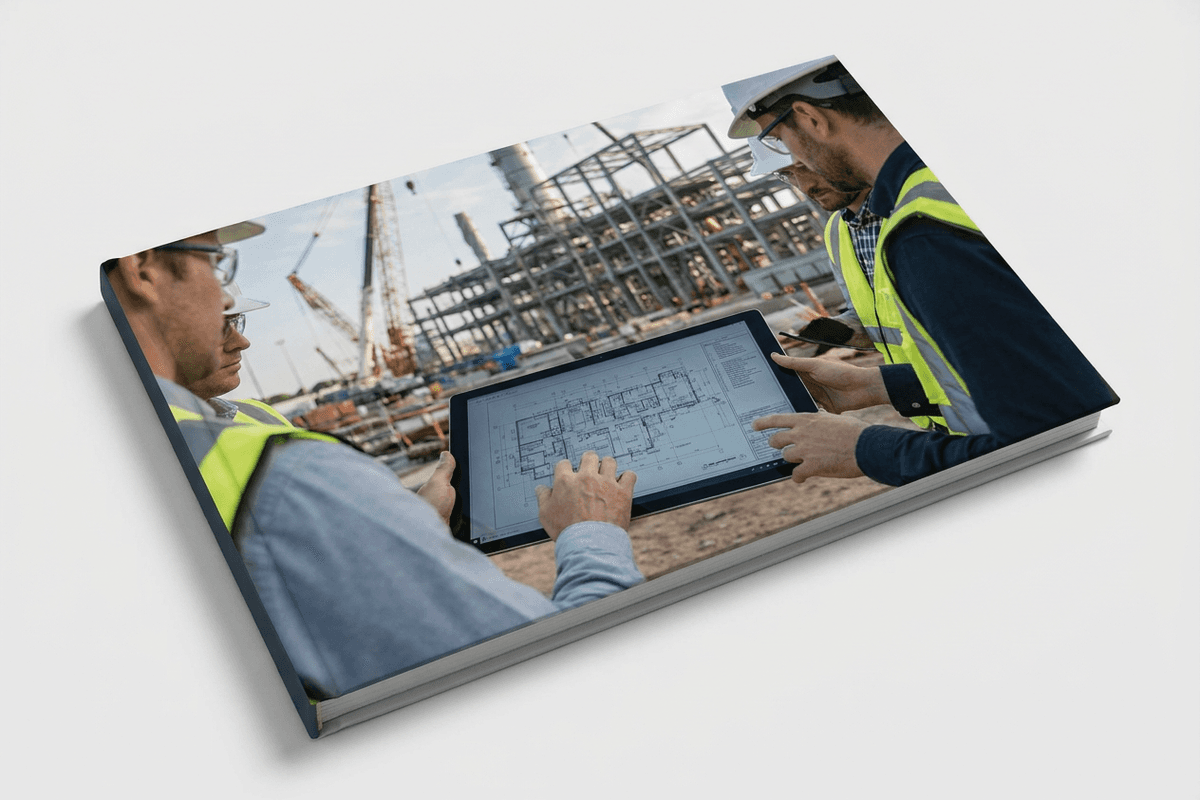

A defining paradox is taking hold across the American engineering landscape: while macroeconomic headwinds and complex regulatory hurdles threaten to stretch project schedules, forward pipelines and firm backlogs are shattering historical records. Leading consultancy WSP reported a record project backlog propelled by insatiable domestic demand for power, grid resilience, and transportation renewal, even as engineering leads navigate intricate permitting bottlenecks. Far from a localized spike, this capital momentum reflects a broader structural realignment across both public works and heavy industrial execution—forcing firms to balance massive public infrastructure commitments against the relentless rise of private mega-facilities.
The Divergent Pipelines: Public Civil Scale vs. Hyperscale Speed
While venture and tech headlines remain fixated on artificial intelligence data centers, heavy civil infrastructure contractors are proving that the conventional public works market has reached unprecedented scale. Heavy civil construction bellwether Tutor Perini identified a staggering $200 billion in upcoming bidding opportunities, posting record quarterly revenue driven by multi-year civic pipelines in transit, military facilities, and healthcare—with virtually none of that pipeline tied to commercial data centers.
This deliberate divergence underscores how enterprise engineering and construction firms are choosing their operating theaters. The public sector, flush with historic federal appropriations from the Infrastructure Investment and Jobs Act (IIJA), offers decadal programmatic stability with guaranteed funding streams. Conversely, the high-voltage mission-critical space offers massive capital velocity with extreme compressed delivery schedules.
"Contractors and engineering consultancies are no longer competing in a zero-sum game for project volume. The challenge has pivoted entirely toward technical capacity, high-voltage equipment lead times, and the engineering workforce needed to convert backlogs into commissioned assets."
Highlighting the velocity of the mission-critical side, Fluor Corporation secured an EPC contract for a $4B-plus AI data center complex for TeraWulf in Hawesville, Kentucky. Transitioning from front-end engineering design (FEED) to full execution, Fluor’s engagement illustrates how heavy industrial engineering providers are applying utility-scale engineering, procurement, and construction (EPC) rigor to private high-performance compute campuses. These installations require gigawatt-scale electrical distribution, specialized closed-loop thermal heat rejection, and dedicated substation ties that mirror major industrial refineries rather than standard commercial buildings.
The Power Modernization Nexus: From Subways to Supercomputers
Whether modernizing historic transit corridors or electrifying AI server clusters, electrical engineering capacity has become the primary gating factor for American physical infrastructure. Power demand is expanding across all vectors simultaneously, from aging urban transit systems to regional transmission networks.
In New York, the Metropolitan Transportation Authority (MTA) recently awarded a $28 million engineering agreement to STV to direct design upgrades across 10 traction power substations and 12 circuit breaker houses. This renewal represents the complex, live-environment brownfield engineering required to keep the nation’s highest-capacity subway network operational. Engineers must replace century-old alternating-current-to-direct-current conversion systems with modern solid-state rectifiers, digital supervisory control and data acquisition (SCADA) systems, and upgraded switchgear without interrupting daily transit throughput.
| Engineering Sector | Primary Driver | Critical Bottleneck | Execution Model |
|---|---|---|---|
| Urban Transit Power (e.g., MTA / STV) | State-of-good-repair, traction power reliability | Live-site access, historic structural integration | Phased design-bid-build / specialized design services |
| Mission-Critical AI (e.g., Fluor / TeraWulf) | Hyperscale LLM training, computational density | Substation transformers, liquid-to-air cooling loops | Turnkey EPC, parallelized modular fabrication |
| Broad Civil & Transport (e.g., WSP, Tutor Perini) | IIJA funding, highway/bridge lifecycle overhauls | Environmental permitting, NEPA reviews, labor supply | Design-Build, Construction Manager/General Contractor (CM/GC) |
| Advanced Manufacturing (e.g., Reshoring hubs) | Supply chain de-risking, CHIPS & IRA incentives | Cleanroom equipment integration, high-purity piping | Integrated Project Delivery (IPD), automated tooling |
Across both brownfield transit revamps and greenfield computing parks, the engineering demands converge on electrical robustness: high-voltage transformer availability, arc-flash mitigation, harmonic distortion filtering, and resilient thermal envelope management.
The Hardware Reshoring Surge and Factory Floor Transformation
The construction boom is directly mirrored by an expansion in domestic manufacturing capacity. According to recent federal labor data, the U.S. manufacturing sector added 19,000 jobs in October, led by hiring in electronics, semiconductors, and precision machinery engineering. This industrial re-acceleration reflects sustained capital deployment into domestic fabrication facilities, answering the strategic call to shorten supply chains for mission-critical hardware.
However, modern factory floors are not simply adding headcount; they are undergoing a fundamental technical evolution. As detailed by Penn State advanced manufacturing researchers, American factories are leaning aggressively into the convergence of artificial intelligence, computer vision, and autonomous robotics to overcome chronic shortages of certified machinists, welders, and tooling specialists.
Key Operational Shifts in Advanced Manufacturing Facilities
- AI-Driven Adaptive Tooling: Robotic arms and multi-axis CNC machines equipped with vision-based AI dynamically adjust to material inconsistencies, thermal tool drift, and tool wear in real time, dramatically driving down scrap rates.
- Safety-Critical Automation: Deploying autonomous systems to handle hazardous tasks—such as high-temperature foundry transport, chemical etching, and heavy ergonomic positioning—protects the workforce while maintaining continuous spindle uptime.
- Predictive In-Situ Metrology: Laser scanning and ultrasonic sensor arrays integrated directly onto assembly lines conduct non-destructive testing (NDT) continuously, replacing slow post-production quality checks.
This automated industrial posture directly enables the construction sector: domestically fabricated switchgear, custom structural steel sections, and precision fluid-handling skids can only hit megaproject delivery timelines if factory throughput keeps pace with the unprecedented backlogs reported by WSP and Fluor.
The Execution Playbook: Navigating Constraints to 2030
With massive pipelines locked in, engineering executives must navigate three primary operational friction points to successfully deliver projects without margin erosion:
- Early Substation and Long-Lead Equipment Procurement: Lead times for high-voltage transformers (HVTs) and medium-voltage switchgear remain stretched past 80 to 120 weeks. Leading engineering firms are decoupling long-lead procurement from final design approval, purchasing standardized equipment packages upfront under provisional FEED authorizations.
- Permitting and Environmental Streamlining: As highlighted in WSP’s market commentary, regulatory and environmental reviews under NEPA continue to induce schedule friction. Engineering consultancies are embedding specialized environmental permitting leads directly into early conceptual teams, using digital twin modeling to preempt community noise, water run-off, and thermal dissipation concerns before agency submission.
- Industrialized Offsite Modularization: Whether outfitting New York subway breaker houses or building out massive AI compute halls in Kentucky, field labor density must be reduced. Firms that convert on-site mechanical, electrical, and plumbing (MEP) installations into standardized, factory-tested modular skids consistently beat schedule baselines while insulating themselves from localized trade labor deficits.
Looking Ahead
The U.S. engineering and construction sector stands at a generational inflection point. The simultaneous expansion of heavy civil infrastructure, urban electrical revitalization, and gigawatt-scale computational real estate has created a demand environment unprecedented in peacetime history. Yet backlogs alone do not generate operating income. The engineering enterprises that thrive through the decade will be those that master the digital-to-hardware interface—coupling predictive design tools, modular fabrication, and aggressive procurement strategies to turn historic backlogs into operational reality.