
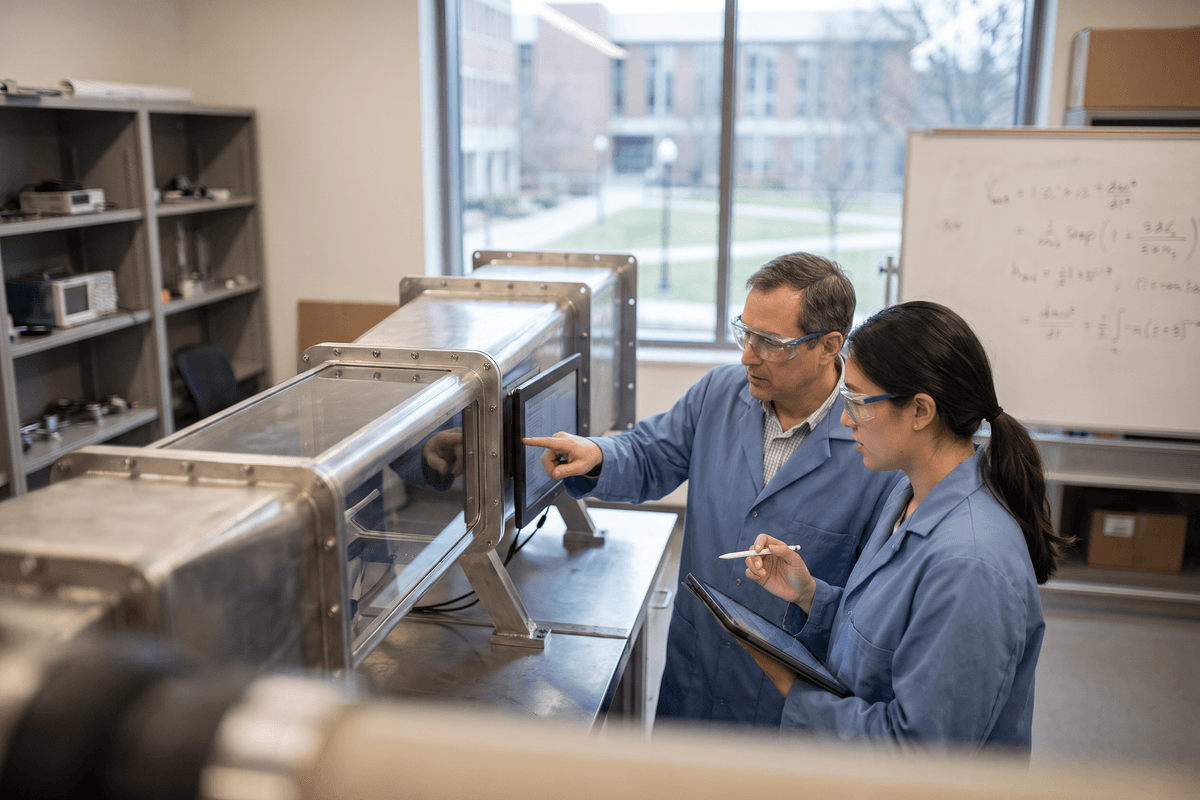

The United States aerospace and defense industrial base is confronting an acute, structural talent deficit at the exact moment geopolitical pressures demand unprecedented technological acceleration. Across hypersonic propulsion, autonomous orbital defense, and next-generation composite structures, the gap between defense-mandated R&D milestones and the availability of cleared, doctoral-level domestic talent has widened into an operational vulnerability. In response to this escalating workforce crunch, The University of Texas at San Antonio launched a new doctoral program in aerospace engineering, establishing a vital talent feeder directly aligned with the burgeoning Texas defense-space corridor and national security research priorities.
The Strategic Imperative: Bridging the Advanced R&D Deficit
For decades, aerospace engineering programs across the nation relied heavily on traditional mechanical engineering departments with aerospace tracks or imported specialized talent to fulfill basic research requirements. However, the modern defense landscape—characterized by extreme aerothermal environments, high-Mach guidance systems, and complex satellite constellations—requires specialized doctoral training from day one. UTSA’s strategic pivot reflects a broader recognition across engineering leadership that generalist graduate tracks are no longer sufficient to maintain competitive parity in contested operational domains.
The establishment of this doctoral program is not merely an academic milestone; it represents a tactical alignment with regional military assets and federal testing facilities. Situated in San Antonio—often termed "Military City, USA"—UTSA is positioned within striking distance of key Air Force research installations, commercial space launch complexes along the Gulf Coast, and the expanding aerospace corridor linking Austin, Houston, and San Antonio.
"The national security imperative for sustained hypersonic dominance and resilient space systems requires an immediate, high-volume pipeline of advanced domestic researchers capable of translating computational fluid dynamics into deployable flight hardware."
Core Focus Areas of the Advanced Curriculum
To directly answer national defense and commercial aerospace requirements, the newly minted doctoral curriculum focuses heavily on four technical pillars where engineering demand outstrips supply:
- Hypersonic Aerothermodynamics: Investigating high-enthalpy boundary layer transition, plasma formation, and extreme thermal management systems operating above Mach 5.
- Advanced Structural Materials & Extreme Environment Alloys: Synthesizing high-temperature ceramic matrix composites (CMCs) and refractory alloys capable of withstanding the mechanical stresses of sustained hypersonic trajectory.
- Autonomous Guidance, Navigation, and Control (GNC): Designing resilient flight-control algorithms resistant to electronic warfare, GPS jamming, and high-g maneuvers.
- Space Systems & In-Orbit Propulsion: Developing low-mass electric propulsion, micro-propulsion architectures, and docking mechanisms for next-generation orbital defense assets.
The Texas Aerospace Corridor: A New Center of Gravity
Texas has rapidly transformed into one of the most dynamic aerospace hubs in the Western Hemisphere. Between the legacy human spaceflight operations at NASA’s Johnson Space Center in Houston, commercial launch facilities in Boca Chica, private engine testing sites in McGregor, and defense contractor expansions across the I-35 corridor, the demand for specialized systems engineers and experimental dynamicists has reached a critical boiling point.
Historically, aerospace talent recruitment was concentrated around Southern California, Washington state, and the Space Coast of Florida. However, capital reallocation, defense contract distribution, and state-level investments have shifted substantial engineering workloads to Texas, creating an urgent need for localized research institutions capable of supporting classified and proprietary research.
| Domain Metric | Legacy Engineering Pipeline | Modern Aerospace PhD Focus (UTSA Model) |
|---|---|---|
| Primary Disciplinary Basis | Generalized Mechanical Engineering with aero electives | Dedicated Aerospace systems, high-enthalpy physics, GNC |
| Research Translation | Theoretical simulation and commercial transport optimization | Dual-use hypersonics, defense payloads, orbital logistics |
| Workforce Integration | National recruitment with high relocation friction | Direct regional industry co-ops, DoD lab integration |
| Security Clearance Readiness | Post-graduation sponsorship (12–18 month lag) | Concurrent clearance pathways via defense-sponsored grants |
Practical Implications for Aerospace and Defense Firms
For engineering executives, program managers, and lead systems architects at major prime contractors—such as Lockheed Martin, Northrop Grumman, Boeing, and L3Harris—the expansion of specialized doctoral programs provides several practical advantages for project execution and long-term risk mitigation.
1. Shortening the Advanced R&D Onboarding Cycle
One of the most persistent bottlenecks in defense aerospace contracting is the extended ramp-up period required for entry-level engineers to become productive in complex domains like high-Mach computational fluid dynamics (CFD) or non-linear aeroelasticity. PhD graduates from targeted programs emerge already proficient in state-of-the-art diagnostic tools, specialized wind tunnel operations, and multiphysics modeling suites, drastically shortening the time-to-productivity on multi-billion-dollar defense contracts.
2. Alleviating the Cleared-Talent Premium
The defense sector continues to face intense wage inflation and recruiting friction driven by the scarcity of U.S. citizens holding advanced STEM degrees eligible for immediate security clearance sponsorship. By expanding domestic graduate cohorts in university labs working on DoD- and NASA-sponsored grants, prime contractors gain earlier access to vetted candidates, lowering recruiting overhead and mitigating project delivery delays.
3. Collaborative Shared Infrastructure
Academic institutions launching high-end doctoral programs invest heavily in specialized facilities—such as Mach-capable wind tunnels, vacuum chambers, and high-performance computing (HPC) clusters. Engineering firms can leverage these facilities through sponsored research agreements and joint venture testbeds, reducing the capital expenditure required to maintain dedicated in-house experimental test infrastructure.
The Road Ahead: Building Resilient Engineering Capacity
As the United States accelerates development cycles for sixth-generation fighters, hypersonic strike-and-defense systems, and commercial low-Earth orbit infrastructure, the foundation of competitive advantage will not rest solely on capital allocation or manufacturing capacity. It will be determined by the depth and velocity of the advanced engineering talent pipeline.
The launch of UTSA’s aerospace engineering PhD program serves as a practical blueprint for how regional research institutions can align academic curricula directly with strategic industrial defense needs. For engineering leaders managing complex aerospace programs, partnering with and investing in these emerging specialized programs is no longer an auxiliary corporate social responsibility initiative—it is a core operational requirement to secure the engineering workforce of the next decade.