
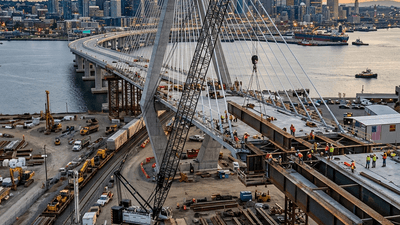



In 2026, the American heavy engineering landscape is no longer defined merely by the ambition of its blueprints, but by the sheer velocity of its capital. A historic alignment of federal infrastructure spending, domestic manufacturing reshoring, and private sector investment has pushed the heavy engineering construction sector to unprecedented heights. Yet, as the capital flows in, a critical question emerges for engineering leaders across the nation: Do we have the specialized workforce required to translate these billions into built reality?
We are currently witnessing a profound transformation in how megaprojects are funded, designed, and executed. The traditional barriers to heavy civil and industrial engineering—primarily funding deficits and bureaucratic red tape—have been temporarily superseded by a new challenge: human capital capacity. To understand the trajectory of U.S. engineering over the next decade, we must examine both the unprecedented financial scale of the current market and the innovative academic-industry partnerships working furiously to supply the talent.
The $42.5 Billion Milestone: Unpacking the Heavy Construction Boom
According to a comprehensive 2026 industry analysis by IBISWorld, heavy engineering construction revenue in the United States has expanded to reach a staggering $42.5 billion. This is not a sudden spike, but rather the compounding result of sustained public funding initiatives maturing into active construction phases.
The primary driver of this expansion is the deployment of public capital aimed at modernizing aging infrastructure and securing domestic supply chains. The Infrastructure Investment and Jobs Act (IIJA) and the CHIPS and Science Act have transitioned from legislative victories into active, ground-breaking realities. For Engineering, Procurement, and Construction (EPC) firms, this represents a golden era of backlog growth, provided they can navigate the complex compliance and execution demands of publicly funded projects.
Shifting from Traditional Civil to Advanced Industrial
While traditional heavy civil projects—such as highways, bridges, and municipal water systems—continue to command a significant portion of this $42.5 billion, the most aggressive growth vectors are found in advanced industrial infrastructure. The reshoring of critical manufacturing, particularly in the semiconductor space, requires a level of heavy engineering precision that bridges the gap between traditional earth-moving and high-tech facility design.
| Infrastructure Category | Primary Capital Driver | Engineering Focus Area |
|---|---|---|
| Traditional Heavy Civil | IIJA (Federal/State Grants) | Structural integrity, climate resilience, materials engineering |
| Advanced Manufacturing | CHIPS Act, Private Equity | Cleanroom design, MEP systems, vibration mitigation |
| Energy Transition | IRA (Tax Credits), DOE Grants | Grid modernization, utility-scale renewables, hydrogen hubs |
The Human Capital Equation: Purdue’s Blueprint for the Future
Capital alone does not pour concrete, design HVAC systems for cleanrooms, or optimize structural load-bearing calculations. The $42.5 billion valuation of the heavy engineering sector is only sustainable if the U.S. can produce the engineers to manage it. Recognizing this, leading academic institutions are fundamentally restructuring their engineering programs to align directly with industrial demand.
A premier example of this alignment is unfolding in Indiana. Purdue University has aggressively expanded its semiconductor and advanced manufacturing programs, partnering directly with industry leaders to educate the next generation of workforce leaders. Their stated goal is ambitious but necessary: graduating over 1,500 students annually equipped with the specific skills required to meet U.S. demand in semiconductor engineering and related heavy industrial facility design.
"The bottleneck of the mid-2020s wasn't capital; it was capacity. The solution for the late 2020s is hyper-targeted academic-industry integration. We are no longer just teaching engineering principles; we are reverse-engineering our curriculum based on the immediate needs of the U.S. industrial base."
Purdue's initiative is indicative of a broader, necessary trend in U.S. engineering education. By creating specialized tracks that blend electrical, mechanical, and civil engineering disciplines with hands-on semiconductor facility experience, they are producing "day-one ready" engineers. For heavy construction firms tasked with building these multi-billion-dollar fabrication plants (fabs), access to this specialized talent pool is the difference between an on-time delivery and costly project overruns.
Strategic Implications for U.S. Engineering Professionals
For engineering firm executives, project managers, and mid-career professionals, this dual reality—massive capital influx paired with a race for specialized talent—requires a strategic pivot. Relying on traditional hiring and project execution methodologies will no longer suffice in a $42.5 billion market.
- Forge Direct Academic Pipelines: Firms can no longer wait for graduates to hit the open job market. Leading EPC firms are establishing direct partnerships with universities, offering localized internships, co-ops, and curriculum input to secure talent years before graduation.
- Cross-Train for Advanced Industrial Projects: Civil and structural engineers should look to upskill in areas relevant to advanced manufacturing. Understanding the rigorous vibration, power, and cleanroom requirements of semiconductor fabs makes a traditional heavy civil engineer exponentially more valuable.
- Leverage Technology to Multiply Talent: With a finite number of engineers entering the workforce, firms must adopt AI-driven design tools, advanced project management software, and prefabrication techniques to maximize the output of their existing teams.
- Master Public Funding Compliance: Because public funds heavily drive the $42.5 billion revenue, engineering professionals must become adept at navigating federal compliance, including prevailing wage requirements, Buy America provisions, and stringent environmental reporting.
Building the Next American Century
The convergence of a $42.5 billion heavy engineering market and aggressive workforce initiatives like Purdue's semiconductor program paints an optimistic picture for the U.S. industrial base. We have moved past the era of deferred maintenance and theoretical reshoring; the capital has been deployed, and the dirt is moving.
The challenge for the remainder of the decade is execution. By embracing targeted workforce development, investing in advanced construction technologies, and adapting to the rigorous demands of high-tech industrial infrastructure, U.S. engineering professionals are not just participating in a market boom—they are physically constructing the foundation of America's economic and technological future.